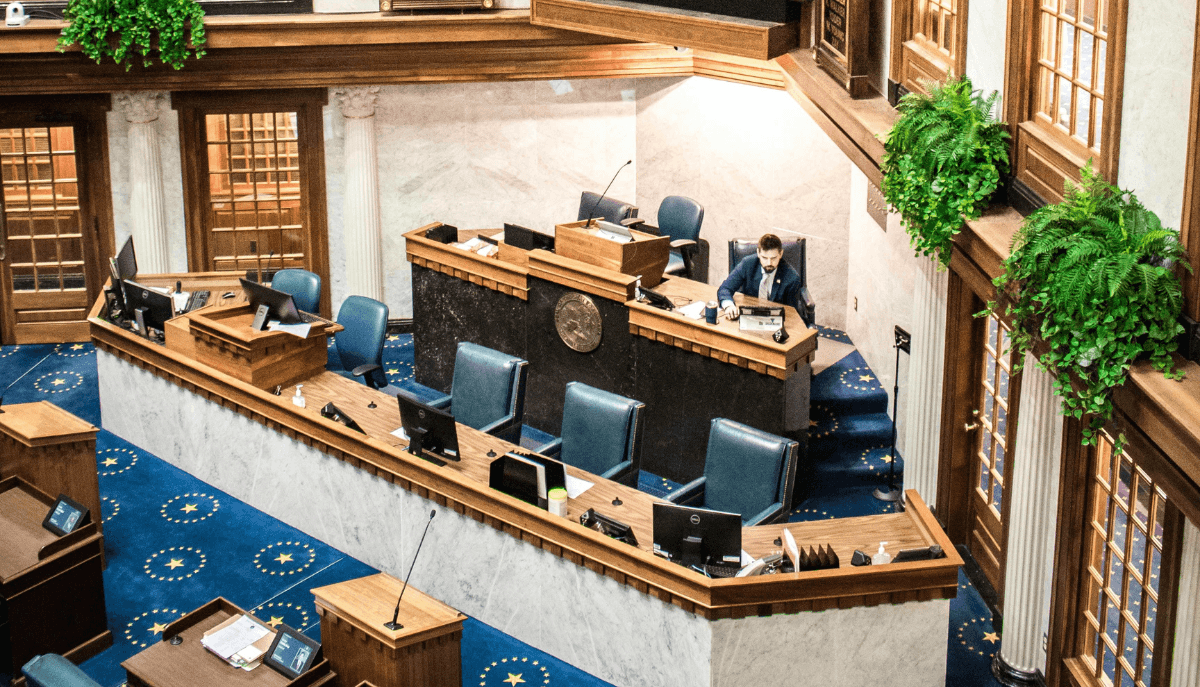
The Tennessee state Senate convened at 9:00 AM Central in Nashville on Wednesday, May 6, 2026, for a floor vote on House Bill 7003, the mid-decade redistricting measure that redraws the state's nine congressional districts and removes the 9th Congressional District as a Black-majority seat. The bill passed the state House on Tuesday by a margin of 75 to 24 after a 14-day special session called by Speaker Cameron Sexton. Governor Bill Lee has indicated he will sign the bill Wednesday afternoon if the Senate concurs, according to a statement issued from the governor's office Tuesday evening.
The proposed map splits Memphis and the surrounding Shelby County area among three congressional districts using the I-240 and Poplar Avenue corridors as boundary lines. The current 9th District, held since 2007 by Democratic Representative Steve Cohen, has a Black voting age population of 62 percent and an overall Black population share of 64 percent, according to 2020 Census tabulations. Under the proposed map, no successor district would have a Black voting age population above 38 percent. The bill's primary sponsor, Representative William Lamberth, told the House on Tuesday that the redistricting was necessary to address what he described as compactness concerns flagged in a memo from state Attorney General Jonathan Skrmetti. House Democratic leader Karen Camper called the bill an effort to remove Black political representation in Tennessee's federal delegation.
The Senate vote is expected to fall along party lines, with 27 Republicans and 6 Democrats. Senate Majority Leader Jack Johnson confirmed Tuesday afternoon that all Republican members would support the bill, with the exception of Senator Ferrell Haile, who has not publicly stated a position. Lieutenant Governor Randy McNally is presiding over the session. Floor amendments offered by Senator Jeff Yarbro of Nashville on Tuesday evening were tabled along party lines. Public observers were limited to gallery seating, and clergy from the Tennessee Black Caucus of State Legislators were among those present.
Litigation preparation is underway by the NAACP Legal Defense Fund and the American Civil Liberties Union of Tennessee. Attorneys for both organizations told reporters Tuesday that they intend to file for a preliminary injunction in the United States District Court for the Western District of Tennessee within hours of the governor's signature. The legal arguments will reference Section 2 of the Voting Rights Act and the Fourteenth Amendment Equal Protection Clause, with reliance on the recent Supreme Court ruling in Callais and on Allen v. Milligan from 2023. The case is expected to be assigned to a three-judge district court panel under federal redistricting procedure. Tennessee's August 6 primary deadline factors into the timeline, with plaintiffs seeking expedited review.
The bill is part of a broader Southern wave of mid-decade redistricting following the Supreme Court's 6-3 ruling in Callais on April 29, 2026, which narrowed the scope of Section 2 protections for race-conscious district drawing. Alabama Governor Kay Ivey signed her state's revised map Monday, eliminating the second Black-majority district that was created in 2024 following Allen v. Milligan. Mississippi Governor Tate Reeves is expected to sign that state's map by May 20, which would alter Representative Bennie Thompson's 2nd District, the longest-serving Black-majority district in the South. Louisiana Governor Jeff Landry signed Louisiana's revised map on April 21, redrawing the 6th District. The Brookings Institution estimated Tuesday that the combined Southern redistricting actions could shift four to six House seats from Democratic to Republican before the November election, in a chamber where Republicans currently hold a 222-213 majority.
Memphis Mayor Paul Young and Shelby County Mayor Lee Harris released a joint statement Tuesday opposing the map and calling on the Tennessee congressional delegation to challenge the bill in federal court. A coalition of Memphis civic organizations including the Memphis NAACP, the African American Clergy Coalition, and the Equity Alliance held a rally at the Lorraine Motel and National Civil Rights Museum on Tuesday morning. Memphis pastor and Tennessee state Representative Justin Pearson testified before a House committee Tuesday afternoon, calling the bill an attempt to silence Memphis and Black Tennesseans. Pearson is expected to be present in the Senate gallery during Wednesday's vote.
Democratic Representative Steve Cohen, whose 9th District seat is the focus of the bill, issued a statement Tuesday evening saying he intends to run in whatever district contains his Memphis residence. Cohen has represented the 9th District since 2007. Republican Representative Mark Green of the 7th District, the only other Tennessee delegation member whose district is significantly altered under the new map, has not commented publicly. The Tennessee Republican Party Chair Scott Golden issued a statement Tuesday calling the redistricting consistent with the will of Tennessee voters.
If the Senate passes the bill Wednesday morning and Governor Lee signs Wednesday afternoon, the new map takes legal effect immediately, subject to potential federal court intervention. The August 6 primary filing deadline will determine whether candidates run under the existing or new map. The federal litigation timeline runs through the summer.