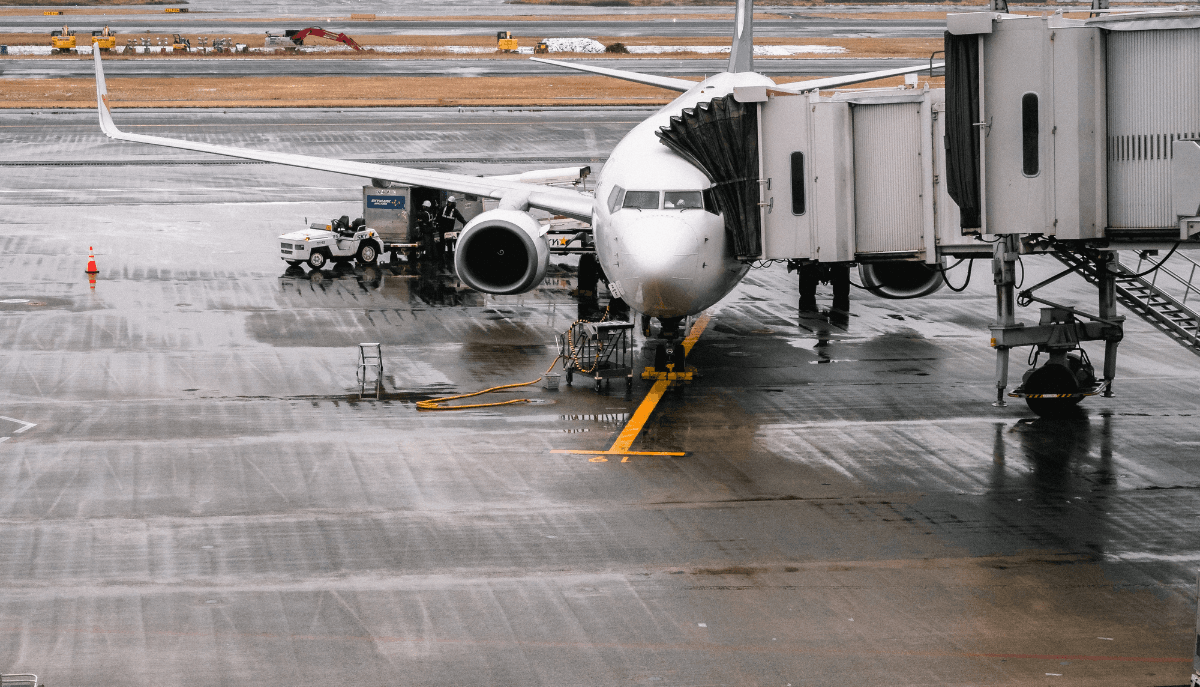
The global aviation industry is facing one of its most disruptive fuel crises in decades. Jet fuel prices in the United States have nearly doubled since late February, climbing from roughly $2.50 per gallon on February 27 to $4.88 per gallon by early April. The increase is sharper than what consumers have seen at the gas pump, and it is forcing airlines around the world to cancel routes, raise ticket prices, and add surcharges that passengers will feel for months to come. The root cause traces directly back to the ongoing conflict with Iran and the United States blockade of ships entering and exiting Iranian ports through the Strait of Hormuz, which began earlier this week.
The scale of the disruption is already measurable. On Monday alone, nearly 7 percent of all global flights were canceled. That amounts to 7,049 of 104,618 scheduled routes scrubbed from the board in a single day, with 14.6 percent of departures from North America wiped out entirely. Scandinavian airline SAS has announced it will cancel 1,000 flights in April. Ryanair CEO Michael O'Leary said the carrier would look to reduce capacity over the summer if the shortage continues. Air New Zealand is cutting 1,100 flights through early May. These are not small adjustments. These are operational shifts that will reshape summer travel plans for millions of people who assumed the worst of the supply disruption was behind them.
The Strait of Hormuz is the pressure point. Roughly 20 percent of the world's oil supply passes through it on a normal day, and the blockade has choked off a critical artery in the global fuel network. Airports Council International Europe issued a warning this week that if significant and stable passage does not resume through the strait by the end of April, a systemic jet fuel shortage will become a reality for the European Union. That is not a projection built on pessimism. It is a logistics calculation based on how much refined fuel is currently in storage, how quickly it is being consumed, and how little is being replenished through normal supply channels.
Airlines are responding the way they always respond when costs spike beyond what their margins can absorb. Fares are rising. Baggage fees are climbing. Fuel surcharges are being tacked onto tickets that were already expensive. Some carriers are shrinking their route networks entirely, pulling out of smaller markets that cannot generate enough revenue per seat to justify the fuel burn. For passengers, this means fewer options, higher prices, and longer booking windows to get the seats they want at the price they can afford. The summer travel season, which was projected to be strong coming into the year, is now looking significantly more expensive and less accessible than anyone anticipated in January.
The economic ripple effects extend well beyond the airport terminal. Tourism dependent economies that rely on international arrivals are watching bookings soften in real time. Hotel chains in Southern Europe and the Caribbean are reporting cancellation upticks as travelers recalculate what they can afford. Business travel budgets, which were already under pressure from corporate cost cutting, are being slashed further. Small and mid-size companies that depend on face to face meetings to close deals are shifting back to video calls, not because they prefer them but because a round trip ticket that cost $400 six weeks ago now costs $700 or more.
The defense and geopolitical dimensions of the fuel crisis add another layer of uncertainty. The United States and Iran are reportedly close to a framework deal, with an April 22 ceasefire deadline approaching. If a deal holds and passage through the Strait of Hormuz normalizes, the supply chain could begin recovering within weeks. But if talks collapse or the blockade intensifies, the fuel shortage will deepen into summer and the aviation industry will face its most challenging operating environment since the early days of the pandemic. There is no scenario where this resolves quietly in the background. The outcome of the next ten days will determine whether airlines spend the summer rebuilding schedules or cutting them further.
What travelers should understand right now is that this is not a temporary inconvenience. Even if geopolitical conditions improve quickly, the lag between crude oil supply normalization and refined jet fuel availability means prices will remain elevated for weeks or months after any deal is reached. Airlines that have already reduced capacity will not add flights back overnight. The infrastructure that moves fuel from refineries to airport tanks operates on contracts and timelines that do not respond to headlines. The disruption has already been baked into the system, and unwinding it will take longer than most people expect.