Almost everyone learned the same routine in a middle school gym class. Sit on the floor, reach for your toes, hold it for a count of 20, then go run. The habit stuck, and decades later people still open a training session by holding stretches while their heart rate sits at resting. The research has been pointing the other direction for roughly 25 years, and it is not a small pile of studies. Static stretching before strength or power work reduces the force a muscle can produce, and it does not deliver the injury protection everyone was promised. That does not make stretching useless. It makes the timing wrong.
The strength effect shows up consistently in the literature. Meta analyses pooling dozens of studies find that static stretching before performance testing reduces maximal strength by roughly 4 to 5 percent on average, with power and explosive output taking a similar or slightly larger hit. Duration matters most. Holds under about 30 seconds produce effects small enough to be practically meaningless, while holds of 60 seconds or longer per muscle group produce the clearest drops. The likely mechanism is a mix of reduced muscle tendon stiffness, which makes the unit less efficient at transmitting force, and a short term change in how aggressively the nervous system recruits the muscle. The effect fades within about 10 to 20 minutes, so a stretch at the very start of a long warm up is not the problem. The stretch immediately before a heavy set is.
The injury claim has held up worse. Reviews of stretching and injury prevention, including randomized trials in military recruits and runners, have generally failed to find a meaningful reduction in overall injury rates from a stretching protocol alone. That surprises people because it feels intuitive that a looser muscle tears less. What the evidence supports instead is that structured warm up programs reduce injuries when they combine several elements. The FIFA 11+ program, studied extensively in soccer players, pairs running, strength, balance and controlled landing work and has shown injury reductions in the range of 30 percent or more in multiple trials. Stretching is a minor component of it. The active parts are doing the work.
Soreness is the third claim, and it also does not survive testing. A Cochrane review examining stretching before or after exercise found effects on muscle soreness that were tiny, on the order of a couple of points on a 100 point scale, which is not something a human being can feel. If you stretch after a hard leg session and feel better the next day, the likely explanations are increased blood flow, the temporary sensation change stretching produces, and the ordinary course of soreness resolving on its own. There is nothing wrong with doing it. There is something wrong with counting on it to prevent the soreness that is coming anyway.
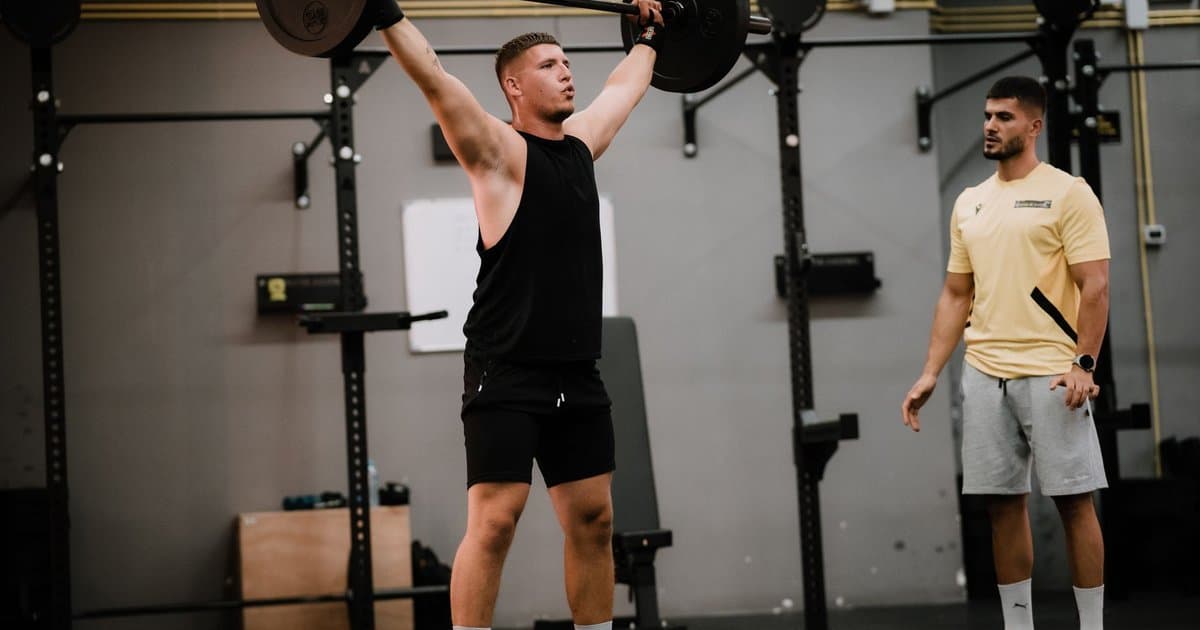
What a warm up should actually accomplish is narrow and physical. Raise muscle temperature, which improves the rate of force development and the speed of muscle contraction. Increase blood flow to the tissue you are about to load. Move the joints through the range you plan to use so the nervous system gets recent information about those positions. Rehearse the movement pattern under progressively heavier load. Five to eight minutes of easy cardio work followed by dynamic movements such as leg swings, walking lunges, hip openers and arm circles covers the first three. Ramp up sets on the first exercise cover the fourth, and they are the part most people skip in a hurry.
Flexibility work still belongs in a training week, and it responds to consistency rather than intensity. Static stretching does improve range of motion over time, with most protocols showing gains after several weeks of regular practice, typically around 30 to 60 seconds per muscle group a few times a week. The best placement is after training, when the tissue is already warm and the reduced force output does not cost you anything, or on a separate day entirely. Someone who genuinely needs range of motion for their sport or their desk job should treat it as its own training block with its own schedule. Ten minutes at the end of a session, done consistently, beats a rushed 90 seconds before a squat.
The practical version fits on an index card. Do not hold long static stretches right before you lift or sprint. Warm up by moving, starting easy and building, and finish the warm up with the movement you are about to train at lighter weight. If a position feels genuinely restricted during warm up, a short 15 to 20 second stretch to open it is fine and unlikely to cost you anything measurable. Save the long holds for after the session or a separate slot in the week. None of this means the old routine ruined anyone's training. It means the habit was built before the evidence existed, and the evidence has been available for a long time now.