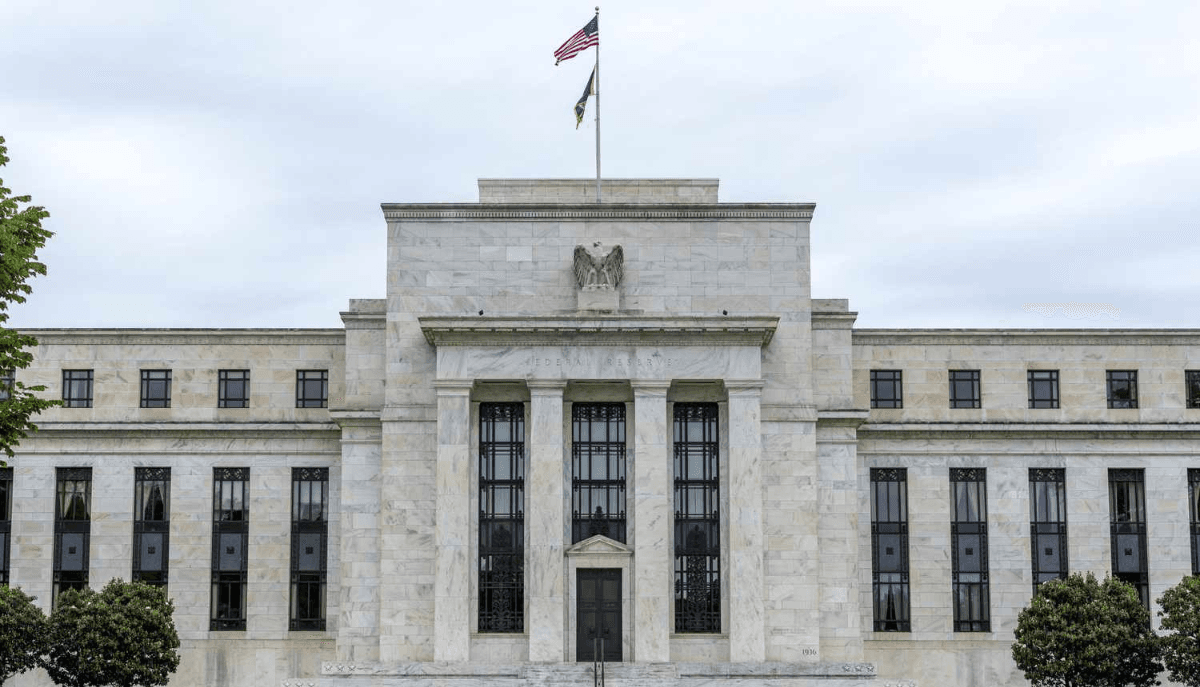
The Federal Open Market Committee convenes Tuesday and Wednesday this week, with the rate decision and policy statement scheduled for release at 2 PM Eastern on Wednesday May 6. Chair Jerome Powell holds his press conference at 2:30 PM. The meeting falls between two consecutive non farm payrolls reports, with the April employment data released last Friday and the May data not due until June 5.
What is on the table. The current federal funds target range is 4.25 to 4.50 percent, where it has stood since the Fed last cut by 25 basis points at the March meeting. Fed funds futures, which reflect market expectations through CME Group's FedWatch tool, are pricing a 92 percent probability that the Fed holds rates steady at this week's meeting. The action is in what comes next. Markets are pricing 64 percent odds of a 25 basis point cut at the June 16 to 17 meeting, and 41 percent odds of two more cuts before year end.
The case for the Fed holding through summer. April non farm payrolls came in at 178,000, above the 140,000 consensus, indicating the labor market remains tight. Average hourly earnings rose 3.6 percent year over year, slightly above the Fed's comfort zone given a 2 percent inflation target. Headline CPI for March was 2.8 percent, with core CPI at 3.1 percent, both still above target. The unemployment rate held at 4.3 percent, below the Fed's longer run estimate of 4.4 percent. By the Fed's own framework, current conditions do not require additional cuts.
The case for cuts arriving sooner. The yield curve, measured by the 10 year minus 2 year spread, sits at plus 51 basis points, the steepest since June 2022. The 10 year Treasury yield closed last week at 4.39 percent, above the federal funds rate, suggesting the market sees term risk and inflation risk slightly higher than the Fed currently does. Crude oil at $108.17 per barrel, driven by the Iran tensions in the Strait of Hormuz, complicates the inflation picture by adding upside pressure to headline CPI just as core measures have been moderating.
What Powell is likely to address in the press conference. Three issues dominate. First, the dispersion within the committee. The March meeting saw three dissents on the cut decision, the most since 2019. The May statement may or may not signal whether the dissenters have moved closer to the majority view. Second, the geopolitical inflation channel. Powell has previously dismissed energy spikes as transitory unless they persist longer than three months. The current spike is in week six. Third, the political context. Powell has confirmed publicly he will step down as chair when his term ends but stay on the Board of Governors, which has implications for continuity that markets are watching closely.
The dot plot is not released this meeting. The summary of economic projections, which includes the dot plot showing each FOMC member's rate path expectations, only updates at the March, June, September, and December meetings. The June meeting is the next dot plot, which means market reactions this week will be driven entirely by the statement language and the press conference rather than by visible projections.
Sector implications worth tracking. Regional bank stocks have rallied 17 percent year to date as the steeper curve improves net interest margin economics. Real estate investment trusts, which have struggled with elevated rates, posted a 14.7 percent return year to date according to the Nareit All Equity REITs index. Both groups would benefit from cuts arriving sooner. Both would correct sharply if the Fed signals a longer hold.
Treasury market positioning. The 2 year Treasury at 3.88 percent reflects a fairly aggressive cutting expectation. The 10 year at 4.39 percent reflects more skepticism. The spread between the two has been a useful read on Fed pricing risk. If the Fed strikes a more hawkish tone Wednesday, the 2 year could give back 15 to 25 basis points quickly. If the tone is dovish, the 10 year could rally another 10 to 20 basis points.
Equity market implications. The S&P 500 closed Friday at 5,847, up 10.4 percent year to date. The Russell 2000 at plus 11.7 percent has outperformed for the first sustained stretch since 2020, which historically correlates with expectations of falling rates and improving credit conditions. The Nasdaq 100 at plus 15.3 percent reflects a different bet, that AI capex spending is largely independent of the rate path.
What to watch for in the statement language. The phrase additional adjustments to policy may be appropriate has been the dovish tell historically. Removing it signals a longer hold. Replacing it with stronger language signals a near term cut. The change between the March statement and the May statement will be parsed line by line by every fixed income desk in the country.