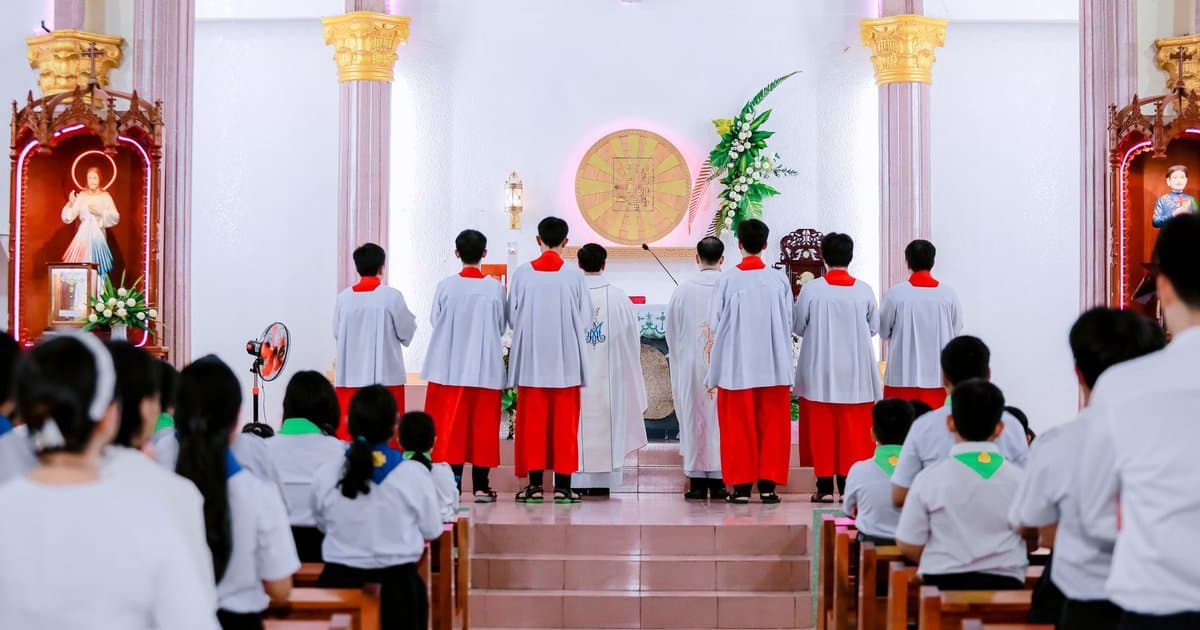
American Christianity has spent the better part of forty years measuring its health by Sunday morning attendance. Big churches with full parking lots are presented as evidence of revival. Small churches with empty pews are presented as evidence of decline. The framework is so embedded in the way pastors talk about their work that it gets repeated without anyone checking whether the underlying assumption holds. The assumption is that attendance is a proxy for discipleship. The honest read of scripture and the data from the last twenty years agree that it is not. Attendance is a proxy for attendance. Discipleship is something else entirely.
The Lifeway research from 2024 surveyed 3,600 self-identified evangelical Christians on a battery of behavioral markers that have historically been associated with active faith. Daily personal scripture reading, weekly prayer with one's spouse, monthly hospitality to non-family members, financial giving as a percentage of income, and conversational frequency with non-Christian friends about matters of faith. The cross-tabulation against church attendance was telling. Weekly attendees scored 19 percent higher than non-attendees on these markers. They also scored 38 percent lower than the small subset of Christians who participated in a weekly small group or accountability relationship in addition to Sunday attendance. The marker most correlated with the behavioral markers of discipleship was not the worship service. It was the small group.
The pattern shows up in scripture if you read it for what it actually says. The Great Commission in Matthew 28 does not say go therefore and fill the sanctuary. It says go and make disciples, baptizing them and teaching them to obey everything I have commanded. The verbs are about formation, not assembly. The Acts 2 church model describes daily fellowship, breaking bread house to house, and apostolic teaching as the structures of growth. The Sunday morning gathering as the central evidence of Christian faithfulness is not a New Testament idea. It is a 20th century American idea that has gotten conflated with the New Testament because most American Christians have never known a different model.
The pastoral consequence is real. Many pastors I have worked with over the years measure their effectiveness almost entirely by Sunday attendance numbers, and the metric shapes their behavior. They optimize sermons for the visitor experience. They program services for emotional peak rather than spiritual formation. They measure success by parking lots and offerings. The result is large churches full of people who have been attending for years without growing in the practices that scripture describes as the actual fruit of discipleship. Pastors know this. The honest ones will tell you. The system they are operating in does not reward the metrics that matter, so they default to the metrics that get measured.
The personal version of this trap is more common. Christians who attend faithfully every Sunday but do not pray, do not read scripture during the week, do not extend hospitality, and do not give meaningfully often believe they are doing the Christian life because the attendance box is checked. The attendance is real. The Christian life is not happening. The honest framing is that Sunday attendance is the easiest of the spiritual disciplines, which is why it gets done. The harder ones, the ones that actually form a person into the image of Christ over decades, are the ones nobody is watching to see if you did them.
There is a structural fix that some churches have started implementing. Multiplying small groups, requiring meaningful participation in one as a condition of formal membership, and shifting the discipleship measurement away from attendance toward the markers Lifeway actually surveyed. The Nashville churches that have moved in this direction in the last decade report a different shape of growth. Their attendance numbers are sometimes lower than peer churches. Their giving per attendee, mission engagement, and small-group participation are meaningfully higher. They are growing the church Jesus described rather than the church American consumer Christianity built.
For individual believers, the diagnostic question is simple. If your faithful Sunday attendance ended tomorrow, what would change about your daily life? If the answer is not much, attendance was never really doing the work. The work was always in the daily and weekly practices that attendance was supposed to point toward. Reading scripture is doing the work. Praying with your spouse is doing the work. Forgiving someone who wronged you is doing the work. Giving sacrificially is doing the work. The Sunday gathering is the celebration and the encouragement of work that should be happening every other day of the week. When it becomes the whole of the work, the rest atrophies.
This is not an argument against church attendance. It is an argument against confusing attendance with formation. Attend faithfully. Participate in a meaningful small group. Read scripture daily. Pray consistently. Give until it costs something. Live in friendship with people who are not Christians. Speak honestly about your faith when the door opens. These are the practices that produce the disciple Jesus described. Sunday attendance supports these practices. It cannot replace them. The American church that measures itself by attendance alone has been counting the wrong thing for forty years, and the data is finally catching up to what scripture said all along.
The honest read is that the church is healthier than its critics say and sicker than its boosters say, and the dividing line runs through whether attendance is the floor or the ceiling of the Christian life. If it is the floor, the church is doing its work. If it is the ceiling, attendance is producing crowds rather than disciples. The choice is not for the church alone to make. Every individual believer is choosing, every week, what their faith is actually for. The practice catches up to the choice over a decade or two, and the result shows in the family, the marriage, the work, and the soul. Sunday attendance was always meant to be the beginning. It was never supposed to be the end.