The Russia and Ukraine war crossed another threshold early Saturday morning when drone debris fell inside Romania and damaged a household annex and an electricity pole in the southeastern city of Galati. Romanian authorities evacuated 200 people from the affected area while emergency services worked through the morning to secure the site. The Ministry of Defense in Bucharest publicly accused Russia of irresponsibility and confirmed that fragments from at least one Russian drone fell on Romanian soil during a wider overnight strike on Ukraine.
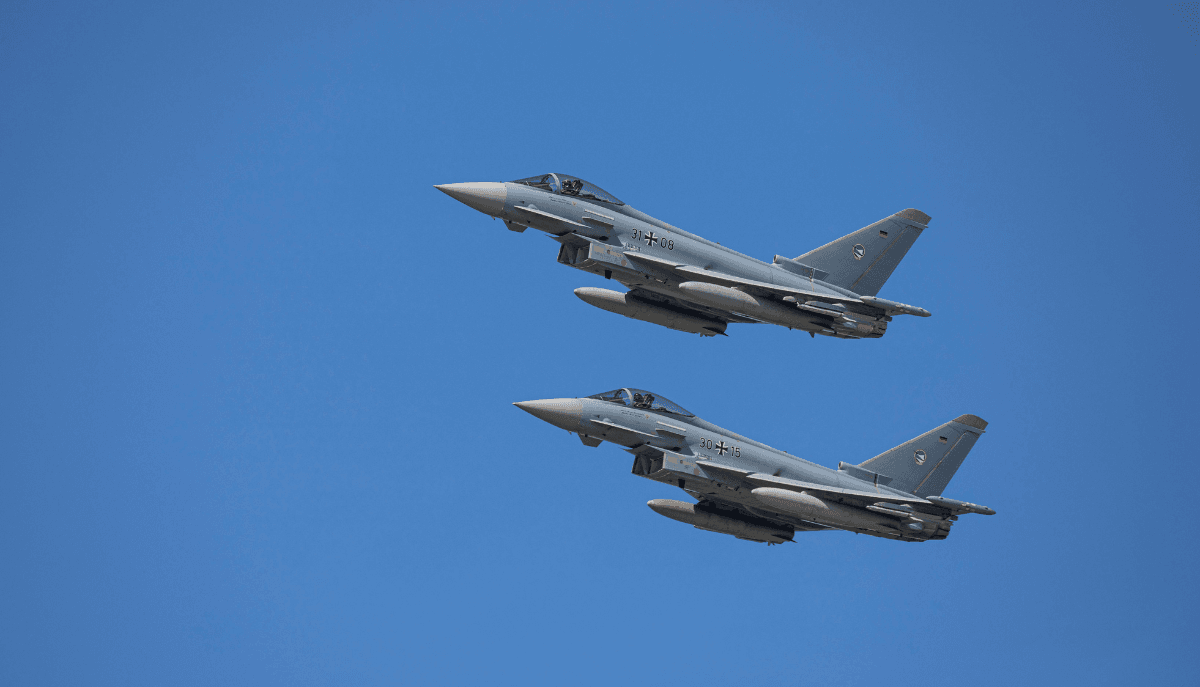
In response to the activity, two British Eurofighter Typhoons were scrambled from Borcea Air Base in Romania during the early hours of the operation. Reports initially circulated that the British pilots had received authorization to engage Russian drones over Romanian territory for the first time. The British Ministry of Defence later denied that the jets were given clearance to fire and confirmed that both aircraft returned to base without engaging in combat. The discrepancy between the two statements has not been fully resolved, but the scrambling itself shows how close the war has moved to NATO airspace on its eastern flank.
Romanian President Nicusor Dan addressed the country Saturday afternoon and called it the first incident in which Romanian property has actually been damaged during the war. He said the threshold of physical damage is one his government takes very seriously and that the response would be calibrated accordingly. The Romanian foreign minister summoned the Russian ambassador to receive a formal protest. The summoning of an ambassador is a step short of expulsion but is the standard diplomatic move for states registering objection without escalating to military action.
The incident is the second time in eighteen months that drone fragments have landed in a NATO country during a Russian strike. The first round of similar incidents in 2024 produced concerns but no clear casualties or property damage. This week's incident is more serious because it crosses the line into actual harm. NATO procedures require consultation among member states whenever airspace is violated or property is damaged by a state actor outside the alliance. Article 4 consultations have not yet been formally invoked but officials in Brussels have said they remain on the table depending on the wider pattern of strikes in coming weeks.
For Black communities and immigrant communities in Nashville, the immediate impact is limited. The longer pattern matters more. Romania is home to a small but growing Romanian American population and Tennessee has received Eastern European immigrants over the last decade through both family reunification and employment based pathways. Tensions on the NATO eastern border tend to flow back into immigration policy debates, particularly around refugee admissions and Temporary Protected Status. Any escalation could accelerate the political pressure that already shapes the policy environment immigrant families navigate every month.
The economic effects are also worth tracking. European energy prices closed higher Friday in anticipation of weekend disruption and oil benchmarks ticked up modestly. Defense contractors continue to benefit from the steady demand. American working families feel that pressure most directly at the gas pump and in heating costs through the back half of any quarter where the war intensifies. Tennessee gasoline averaged 4.12 dollars per gallon Friday according to AAA, roughly 8 cents above the national average and 22 cents above the state average from this week last year.
What happens next depends on three factors. The first is whether the British pilots actually had clearance to engage and whether London is willing to confirm that publicly. The Ministry of Defence statement walked the question back without fully closing it, which suggests the answer is politically sensitive on both sides of the channel. The second is whether NATO members invoke Article 4 consultations. The third is the rate of strike activity in coming weeks and whether the pattern of fragments crossing into NATO territory continues or whether this incident remains isolated.
The official statements from London, Bucharest, and Brussels matter. So does the absence of statements. NATO members have generally tried to avoid public escalation while making clear that physical damage to alliance territory will not be accepted as routine. The line between deterrence and provocation runs through what each capital chooses to say and not say in the first 72 hours after an incident. The next round of comments will tell us a great deal about how the alliance plans to handle a war that no longer ends cleanly at the Ukrainian border.
For now, the operational reality is unchanged. Russian strikes on Ukraine continue. NATO border states stay on alert. British and other allied jets remain forward deployed at Romanian and Polish air bases. The threshold has shifted, however slightly, and the next several weeks will show whether the response shifts with it.