The reason podcast editing eats so many hours is rarely the show itself. It is the absence of a system. Most creators sit down after the recording and start scrubbing waveforms by ear, fixing problems they could have prevented in setup, and listening to entire interviews three or four times before exporting. The same episode that takes one editor seven hours takes another editor 90 minutes, and the gap has almost nothing to do with talent. The gap is the workflow. Seven habits, used together, will collapse the timeline faster than any single piece of software ever will.
The first habit is templates for every show. Open a fresh session and you are starting from zero, dragging plugins onto each track, naming things, setting routing. A locked template with bus structure, effects chains, loudness targets, and color tags already in place removes 20 to 30 minutes from the front of every edit. Build one template for solo shows, one for two person, one for panels, and one for live tape. Save them in the same folder, label them clearly, and treat them as untouchable. You only modify the copy, never the original.
The second habit is color tagging during the recording, not after. While the conversation is happening, drop a marker every time a section starts, a guest stumbles, or a callback shows up. Take five seconds at the moment and save 15 minutes of scrubbing later. Hindenburg, Reaper, and Adobe Audition all allow live markers with one keystroke. Even a notepad with timestamps works. The downstream editor knows exactly where to cut, where to keep, and where to pull a clip for social.
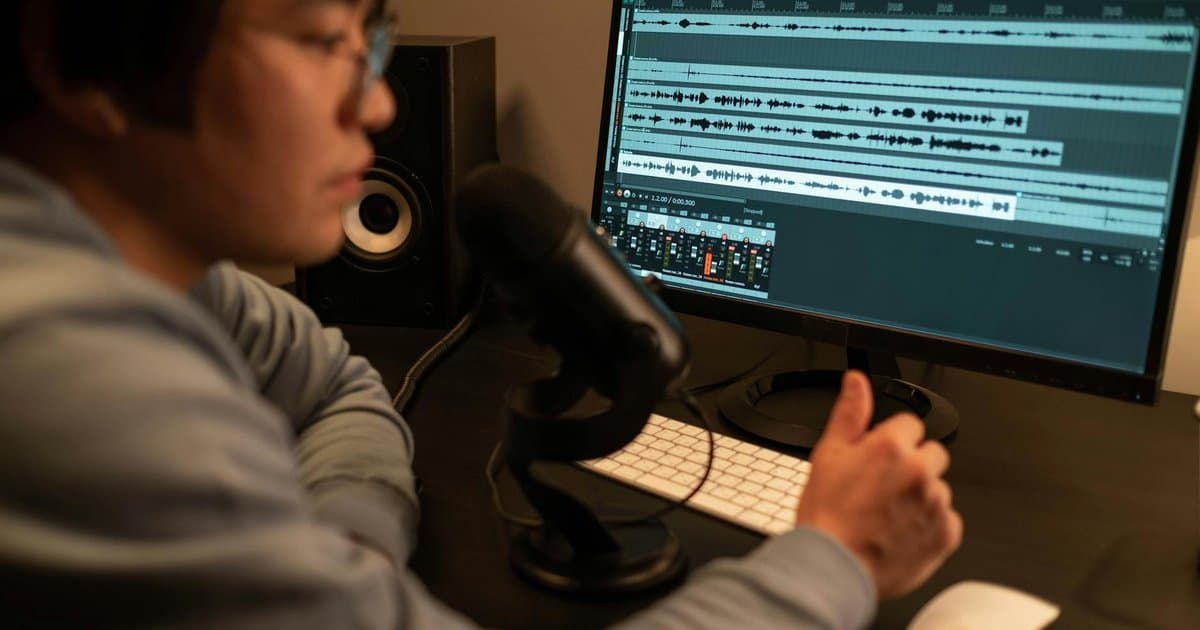
The third habit is batching the noise pass. Instead of fixing pops, plosives, and breath noise as you encounter them, run a single sweep dedicated to nothing else. iZotope RX, Auphonic, and the Adobe AI tools handle 90 percent of these problems without manual intervention. Apply the pass before any creative editing happens, because the cleaner the track sounds at that stage, the less your ear has to fight to make decisions about content. Saving the cleanup for last forces you to do it twice.
The fourth habit is hotkeys that match your hands. Default key bindings are slow. Set ripple delete, split, fade in, fade out, zoom, and play to keys your fingers find without looking. Working editors average 3 to 5 keystrokes per minute and rarely touch the mouse for routine cuts. Most software lets you import a friend's keymap. Premiere, DaVinci Resolve, and Descript all support this. Spend an hour customizing the first time and save dozens of hours over the year.
The fifth habit is listening at 1.5x or 2x for the structural pass, not the detail pass. The structural pass is where you decide what stays, what cuts, and where the segments go. At 1.5x you absorb the content faster without losing meaning. Then drop back to 1x for the detail pass, which is where breath cuts, filler words, and trim points get handled. Mixing those two passes into one is the single biggest hidden time sink in podcast editing.
The sixth habit is strict end of day exports. The temptation to keep tweaking is real. Set a hard rule that the episode exports at the end of the working day, even if it is not perfect. The next morning you can listen with fresh ears and decide if anything actually needs another pass. Most days, nothing does. The version that felt rough at midnight feels fine at 8 AM, because your ears were tired and your standards drifted with them.
The seventh habit is building the show notes inside the editor. Most editors switch to a separate document to write timestamps and chapter markers, which doubles the time. Instead, write them directly in the marker text inside your editor. Export the marker list as a CSV or text file when you finish the episode. The show notes are already done, and the chapter markers sync automatically to Apple Podcasts, Spotify, and YouTube. No separate document, no second pass, no version drift between notes and audio.
The time savings from this stack add up faster than people expect. A creator who edited 4 hours per episode before usually drops to 2 hours within two weeks of applying these. By month two they are at 90 minutes for the same length show. The work feels easier because the brain is not constantly switching tasks, and the show sounds more consistent because the same chain runs on every episode. None of this requires expensive software, premium subscriptions, or hiring an editor.
The last thing worth saying is that consistency matters more than perfection. A show edited the same way every week builds trust with the audience because the sound profile becomes familiar. Listeners know how it will feel before they hit play, and that lowers the friction of returning. The hours you save go back into recording more episodes, building better questions, and promoting the show, which are the three things that actually grow a podcast. The edit was never the bottleneck. The system around the edit was.