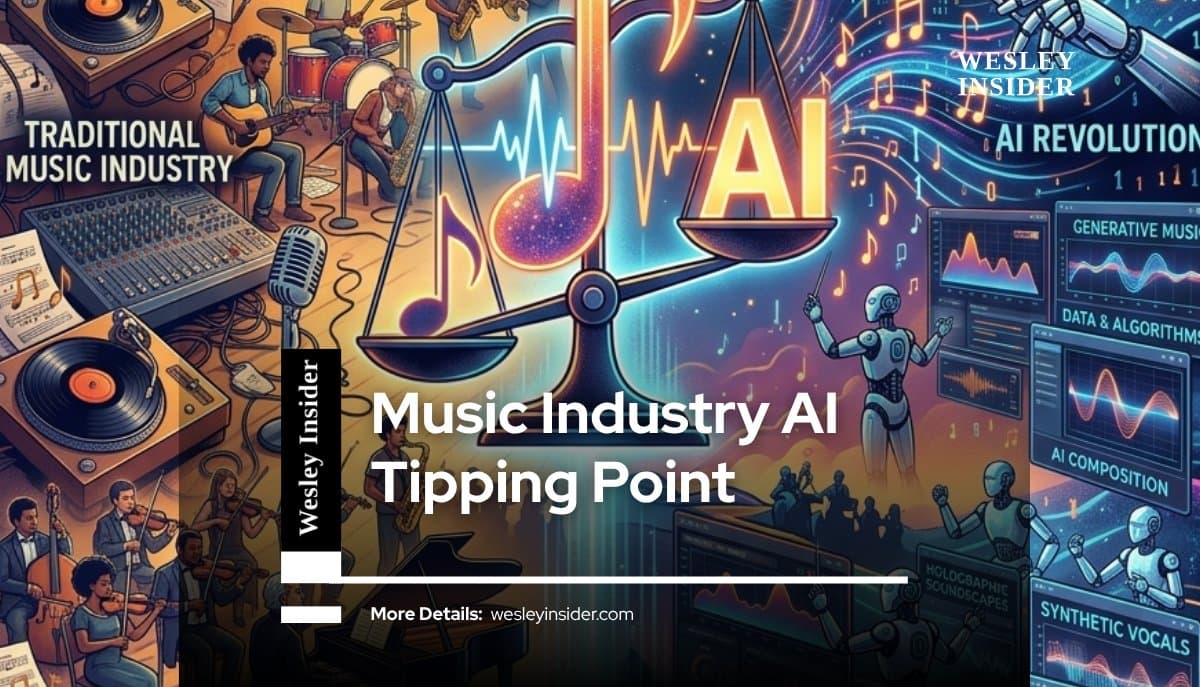
The Hollywood Reporter ran a piece this week describing what many inside the music industry already know firsthand: the AI conversation has crossed from abstract future possibility into present operational reality. Labels are using it for A&R analysis. Publishers are running catalogs through machine learning systems to detect similarities and protect licensing. Producers who built careers on their ear for sound are using AI tools to generate stems, explore arrangements, and speed up the parts of production that used to take weeks. The technology is inside the industry. The question of whether to engage with it is mostly settled. What is not settled is everything else.
The rights framework is the most pressing unresolved issue. When an artist's voice is used to train a model or when a catalog is fed into a system that learns to replicate its style, the legal language that governs what that means is either nonexistent or deeply contested. The Recording Industry Association of America and several large publishing houses have been aggressive in filing suits and pushing for congressional action, but legislation moves slowly and technology does not. In the meantime, individual deals between labels and AI companies are being negotiated under nondisclosure agreements, which means the precedents being set right now are mostly invisible to the artists whose work is most directly affected.
For working artists, particularly independent ones, the situation is complicated in a different way. The tools are available and in many cases genuinely useful. An indie artist who cannot afford to book a full session at a top studio can use AI-assisted production software to achieve a level of sonic quality that was previously inaccessible at their budget. That is a real shift. The same artist can generate marketing copy, create visual content, and analyze streaming data with tools that cost a fraction of what an agency would charge. The floor for what a solo creator can produce has been raised significantly in the last two years, and AI is a meaningful part of the reason why.
The tension comes when those same tools are trained on the work of artists who did not consent to being part of the training data. That is not a hypothetical concern anymore. Several high-profile cases have emerged where AI-generated tracks that closely resembled specific artists circulated widely before being identified and removed. The gap between a tool that helps an artist work more efficiently and a tool that reproduces the output of an artist without their knowledge or compensation is not always visible on the surface. That ambiguity is where most of the industry's legal and ethical conflict is currently concentrated.
Major labels have taken different positions on how to handle this. Some have embraced AI partnerships and built internal tools that give them more control over how their catalogs are used. Others have been more cautious, waiting to see how the legal landscape clarifies before committing to any particular direction. Universal Music Group, Warner Music Group, and Sony have all made public statements at various points that emphasize protecting artist rights while also acknowledging that the technology is not going away. The practical meaning of those commitments is still being worked out in contract negotiations and court filings.
What is becoming clearer is that the artists who will navigate this transition most successfully are those who treat AI as a tool in their hands rather than something happening to them from the outside. That requires understanding what the tools actually do, which takes time and effort most artists have not prioritized because the conversation has felt abstract or distant. It is not distant anymore. The artists who have already integrated AI into their workflows, maintained control over their creative process, and built audiences around something genuinely personal are in a fundamentally different position than those who have not engaged at all.
The live music industry, for now, remains largely immune to AI disruption. Audiences still pay significant money to be in a room with a human being performing. The Pollstar Live conference happening this week in Los Angeles is full of professionals who see the live sector as the durable core of the music business precisely because it cannot be replicated by software. Touring revenue has never been more important to an artist's income, and that dynamic is likely to intensify as recorded music economics continue shifting under AI pressure.
Where the music industry lands on all of this over the next three to five years will depend heavily on how courts interpret existing copyright law in relation to AI training, whether Congress acts on any of the pending legislation, and how much the public ultimately cares about the distinction between human-made and AI-assisted music. Those are open questions. The tipping point the Hollywood Reporter described is real. What tips over on the other side is still being decided.