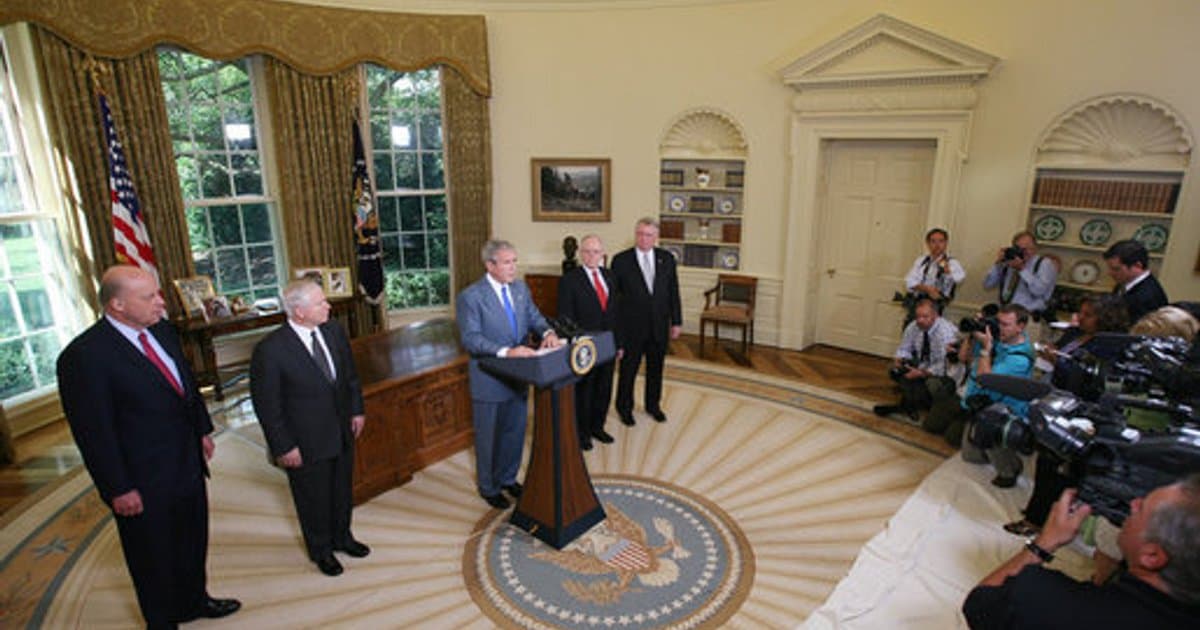
The conventional civic education tells Americans that Congress is where major policy gets decided. The structure of contemporary governance has quietly inverted that assumption. With the federal legislature operating in a sustained period of legislative paralysis (Congress passed 27 bills into law in 2025, the lowest output since World War II by some measures), the meaningful policy decisions affecting daily American life are now being made at the state level. State legislatures passed 24,400 bills into law across the 50 states in 2025, ranging from substantive education and healthcare reforms to immigration enforcement to consumer protections. The center of gravity in US policymaking has shifted, and most citizens are still paying attention to the wrong arena.
The shift is not abstract. State legislatures have moved aggressively into policy areas that used to be primarily federal. School curriculum standards, immigration cooperation with federal agencies, abortion access and limitations, gun policy, marijuana legalization, voting rules, occupational licensing, energy policy, and AI governance are all now substantially decided at the state level. Tennessee's 2026 legislative session, which closed in late April, passed bills affecting school choice expansion, immigration enforcement requirements, electricity utility governance, and pharmaceutical pricing transparency. Each of those bills affects daily life in the state more directly than any single piece of federal legislation passed in 2025.
The contrarian read is that this is not a bad thing, even though many commentators frame it as concerning. State legislatures sit closer to the populations they govern. State legislators in most states represent districts of 30,000 to 80,000 constituents, compared with the average congressional district of roughly 760,000 constituents. The accessibility ratio is dramatically different. A constituent who wants to influence state policy can plausibly meet with their representative, attend the actual legislative hearings, and have their input read by the staff. The same constituent at the federal level is one of three quarters of a million people seeking the same access. The democratic responsiveness, in the literal sense, is higher at the state level.
The data on policy implementation also favors the state level for many issue categories. State legislative cycles are shorter (most legislatures meet for 60 to 120 days annually), which forces decisions and accountability on faster timelines. Federal legislation often takes 5 to 10 years from introduction to implementation, and many bills die in committee never to be reconsidered. State bills move from introduction to passage to implementation often within a single calendar year. The pace allows policy experimentation and adjustment that the federal system structurally cannot match. Conservative states, progressive states, and states in the middle have all run their own experiments on policy questions that federal Congress has been deadlocked on for years.
The 50-state laboratory effect is real and underrated. California's 2024 AI safety legislation has now been used as a model for proposed bills in 14 other states. Tennessee's 2025 healthcare price transparency legislation has been replicated in 8 states. Florida's school choice voucher expansion has been adopted in modified forms in 11 states. Texas's energy grid governance reforms (after the 2021 winter storm crisis) have informed grid policy in 19 states. The replication patterns show that what works in one state often gets adopted in others within 2 to 4 years. The federal Congress, paralyzed on these same issues, follows the state-level evidence rather than leading on it.
The implication for citizen engagement is concrete. The hours spent watching cable news coverage of federal Congress produce essentially zero policy influence for the average citizen. The hours spent attending state legislative committee hearings, contacting state representatives, and showing up to local primary elections produce meaningful policy influence. The math on civic engagement has flipped. The federal arena is where the political theater happens. The state arena is where the policy actually happens. Citizens who optimize for the theater are missing the substance.
There is a counter-argument that some of the most important policy questions (Social Security, Medicare, defense, monetary policy, immigration) remain primarily federal. That is true. But even those issues are increasingly being shaped at the state level through implementation decisions, supplemental funding, enforcement choices, and litigation. Tennessee's recent legislation requiring state cooperation with federal immigration enforcement is a state-level decision that materially shapes how federal immigration policy actually operates within the state. The federal-state interaction now runs in both directions. The state lever is often the operationally consequential one even on nominally federal issues.
For Nashville and Tennessee residents specifically, the 2026 session illustrated the pattern. The General Assembly passed bills directly affecting Nashville utility governance (NES restructuring), downtown public safety (state troopers in tourism district), school choice expansion (35,000-seat voucher cap), immigration enforcement (mandatory cooperation with ICE), and library content restrictions. None of these required federal legislation. All of them affect Nashville residents within months. Citizens who attended state legislative hearings on these bills had real influence. Citizens who watched the federal news during the same period had none.
The honest civic education in 2026 needs to update for this reality. The federal level still matters for the categories it controls. State legislatures have become the decisive venue for most domestic policy questions that affect daily life. The civic energy directed at federal Congress is largely wasted. The civic energy directed at state legislatures produces real outcomes. This is not a comment on whether you should be engaged. It is a comment on where engagement actually translates into policy influence in the current structure.
For most readers, the practical move is to identify your state representative and state senator, learn how to contact their offices, learn the schedule of your state legislature's session, and identify the 2 or 3 issues you care most about. That investment of attention is the most consequential civic engagement available in 2026. The federal arena will continue to absorb most of the news coverage and political fundraising. The state arena will continue to make most of the decisions. The voters who notice the gap and act on it are the voters whose preferences actually shape policy. The voters who do not are spectating a different game than the one being played.