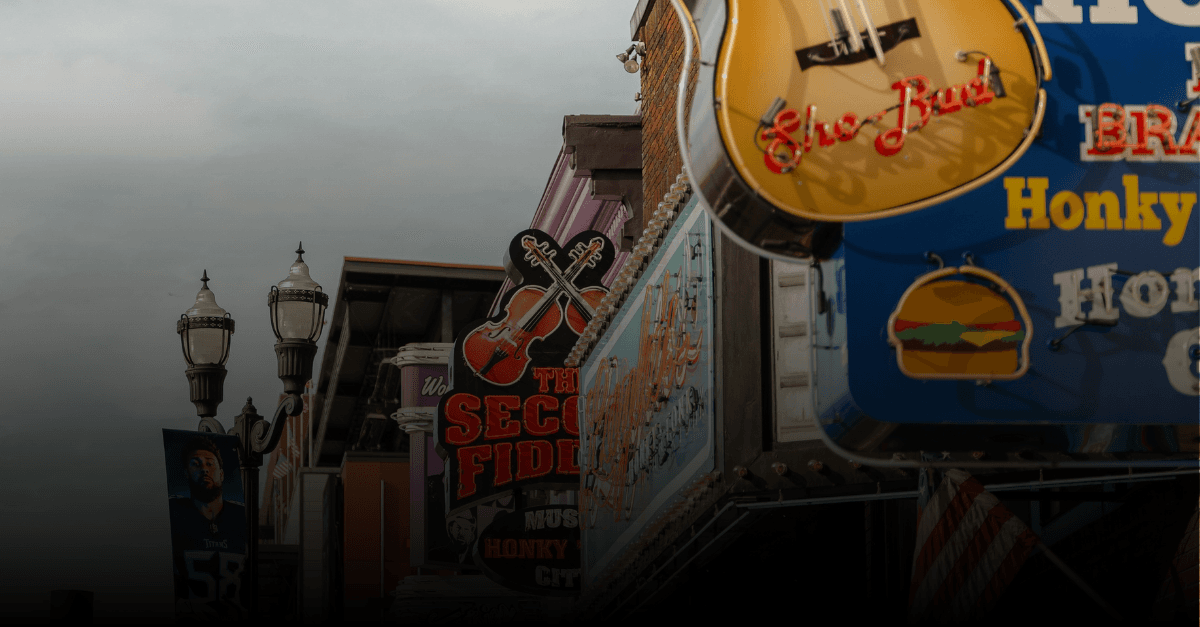
Most people's mental map of Nashville music starts and ends with country. The Ryman, Broadway, Music Row, the Grand Ole Opry. That is the version of the city that gets the documentary treatment and the magazine covers. It is real and it matters. But there is another Nashville that has been building quietly for years, and in 2026, it is becoming impossible to ignore. The city has developed a serious Black music ecosystem that spans gospel, R&B, soul, and increasingly hip hop, and the artists coming out of it are not just local acts playing weekend shows. They are building national audiences and signing major label deals.
Nashville's gospel tradition runs deep. This is a city where Sunday morning still matters to a significant portion of the population, and the quality of gospel music in Black churches here has always been high. What has changed in recent years is that the gospel infrastructure, the producers, the studios, the musicians, the vocal coaches, has begun feeding into secular music in ways it previously did not. Artists who grew up singing in church choirs in Antioch and Bordeaux and North Nashville have found that the skills they developed in those rooms translate into marketable artistry in R&B and soul. The crossover is not new nationally, but it is accelerating locally.
The independent studio scene in Nashville is a significant part of what's driving this. A generation of Black producers and engineers built careers supporting the country industry and then started applying those skills and connections to different genres. The city has world-class recording infrastructure, session musicians who can play anything, and a community of professionals who understand the business side of the music industry in ways that most emerging markets do not. That combination makes Nashville a legitimate place to develop a music career in a genre that has nothing to do with trucks and pickup lines.
There are specific names worth knowing if you want to track this story. A handful of Nashville-based R&B artists have broken through in recent years with streaming numbers that would have been unthinkable for an independent act based in Middle Tennessee a decade ago. Gospel acts from Nashville are getting crossover placement in R&B playlists regularly. The Faith section of the Billboard charts has been dominated by Nashville-adjacent productions for the past three years. And a new wave of hip hop artists from the city are building audiences through TikTok and YouTube while staying rooted in Nashville rather than relocating to Atlanta or Los Angeles.
The business side of this is interesting for reasons beyond music. Nashville is rapidly becoming a hub for entertainment entrepreneurship broadly, and Black entrepreneurs in the music space are part of that story. The same forces that have brought tech companies and healthcare businesses to Nashville are making it a more attractive city for creative industry infrastructure. Record labels are opening satellite offices here. Management companies are relocating. Publishing deals are being signed in Nashville that would have happened in New York or LA five years ago. The economics of the music business increasingly reward being in a city with lower costs and high creative density, and Nashville fits that profile well.
What the industry is starting to recognize is what people who live here have known for a while. Nashville's Black music community has always been talented. What was missing was visibility and the kind of institutional support that country music has always enjoyed. The growth of streaming has partially solved the visibility problem by making geography less determinative of reach. The growth of the Black entrepreneurship infrastructure in Nashville is beginning to address the institutional support gap. The two trends are intersecting at a moment when Nashville's national profile is higher than it has ever been. The artists and creators building here right now are doing so at the right time in the right city, and the music they are making is worth seeking out.