The sneaker market crossed $100 billion in 2026. That number gets cited in press releases and quarterly investor calls, but what it actually reflects is a fundamental transformation in how the world thinks about footwear. Sneakers stopped being athletic equipment or casual shoes decades ago. They became cultural objects, status signals, collector investments, and a language for self-expression that cuts across age, geography, and income level in ways that most fashion categories cannot match. The $100 billion figure is the financial measurement of something that began as youth subculture and became mainstream consumer infrastructure.
The Mordor Intelligence report released in April 2026 projects the market growing at a 7.41 percent compound annual rate through 2031, driven primarily by two converging forces. The first is the continued dominance of athleisure as the primary aesthetic framework for how people dress. The formal-casual divide that once organized wardrobes has largely collapsed for most consumers under forty. A sneaker is an acceptable foundation for a workplace outfit, a dinner outfit, and a gym outfit simultaneously. That flexibility makes sneakers disproportionately valuable as a wardrobe investment compared to more specialized footwear, and it keeps the purchase cycle active. You are always in the market for a new pair because the pairs you own are working harder than they used to.
The second driver is the investment and resale economy that has developed around limited-release sneakers over the past decade. What began as a niche practice among hardcore collectors has become a recognized asset class. Platforms like StockX, GOAT, and Flight Club have created transparent secondary markets with pricing data that treats sneakers the way commodity markets treat any other traded good. Buyers use price history charts to identify undervalued models. Sellers time their listings around cultural moments that spike demand. Institutional investors have begun including sneaker portfolios in alternative asset discussions alongside art and wine. The model is not accessible to most consumers at significant scale, but its existence legitimizes the idea that sneakers can hold and appreciate in value, which changes how even casual buyers think about their purchases.
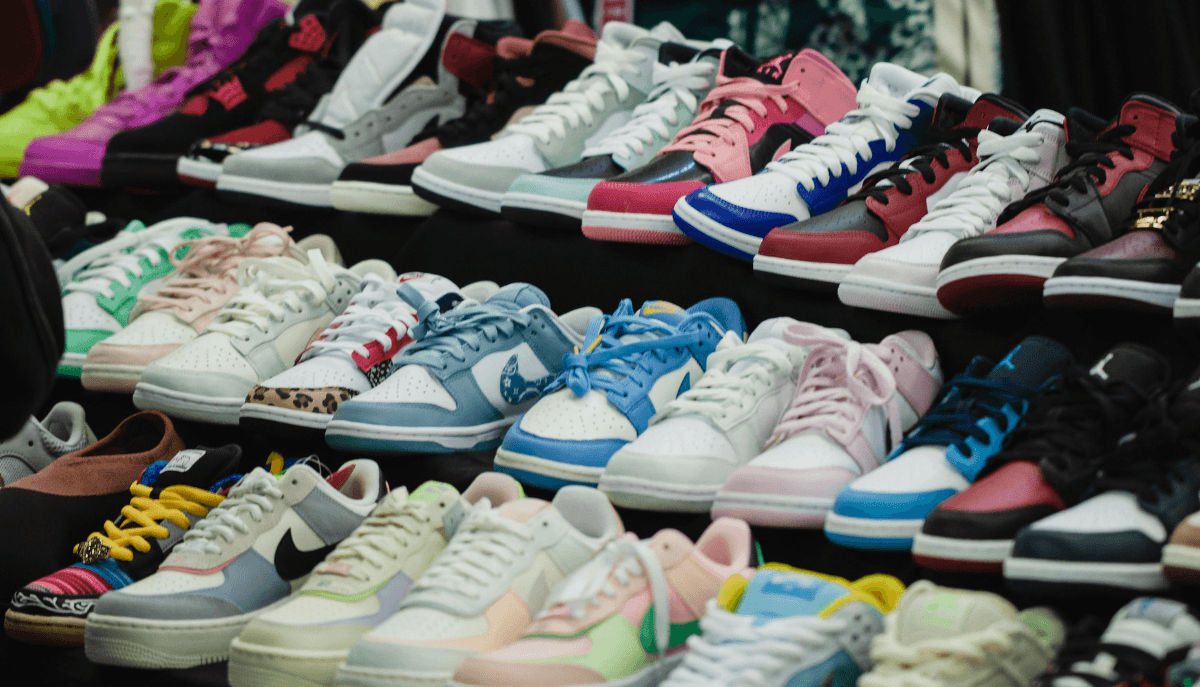
The April 2026 release calendar has been particularly active for both of the market's primary emotional drivers: nostalgia and collaboration. The Jordan Brand continues to draw enormous crowds for retro releases, with the Women's Air Jordan 4 "Pink Denim" selling through in minutes. The Kobe 11 Elite "Mamba Day" release, timed to mark the tenth anniversary of Kobe Bryant's final NBA game, demonstrated that tribute releases tied to cultural moments generate demand that standard colorways cannot match. These are not just shoes. They are artifacts connected to specific memories and identities, and the premium consumers are willing to pay for that connection has proven durable across economic cycles.
Collaboration culture remains the industry's most reliable mechanism for generating heat and reaching new audiences. The NIGO x Nike Air Force 1 collaboration generated discussion well beyond the sneaker community, partly because NIGO's cultural footprint spans fashion, music, and art in ways that make his collaborations feel like events rather than product launches. The most valuable sneaker collaborations in 2026 are the ones where both parties bring genuinely different audiences and the resulting product is something that neither could have made alone. That formula, when executed well, creates a market expansion moment rather than simply reshuffling existing demand.
The streetwear adjacent to sneaker culture is also in transition. The maximalism that defined the streetwear aesthetic for most of the 2010s, the oversized logos, the loud graphics, the conspicuous luxury signals, has been giving way to something quieter and more craft-focused. Consumers who have been in the market long enough to have bought through multiple trend cycles are gravitating toward quality construction, subtle details, and pieces that will hold their relevance outside a specific cultural moment. That shift is visible in what is selling and what is stagnating on retail floors. The market is maturing, and maturing markets reward quality over noise.
What the $100 billion number ultimately signals is that the sneaker market has graduated from a trend to a structural feature of consumer culture. It is not going away. It is not going back to being a niche hobby for people who camp outside stores for limited drops. It is a permanent, global, multi-generational market that is going to continue growing as it expands into developing economies and as the generations that grew up with sneaker culture as their primary aesthetic framework age into their peak earning years. The floor is high and the ceiling is not visible yet.