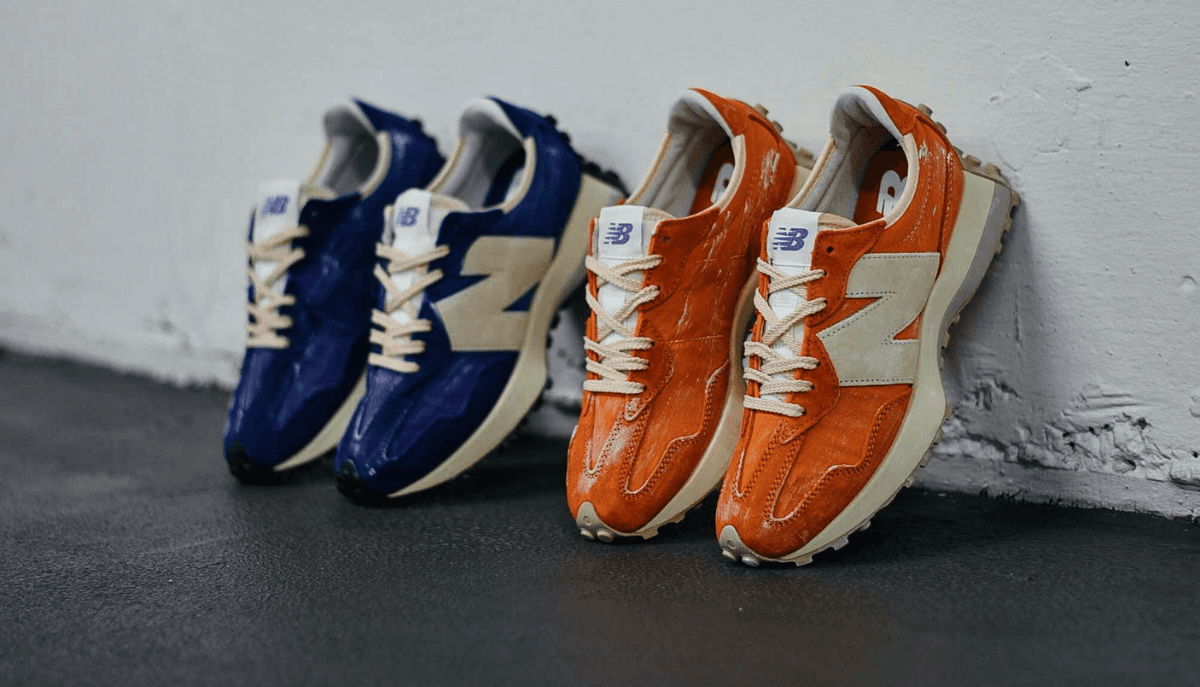
There was a moment somewhere around 2023 when New Balance stopped being the shoe your dad wore to cut the grass and started being the shoe that the most intentional people in fashion chose to wear every day. That shift did not happen because of a single collaboration or a celebrity endorsement deal. It happened because New Balance did something that almost no other sneaker brand was willing to do during the hype era. They focused on making good shoes for people who actually wear them, and then they let the culture come to them instead of chasing it with limited drops, artificial scarcity, and the kind of marketing machinery that turns every release into a gambling event.
The numbers reflect the shift. New Balance has been one of the fastest growing sneaker brands globally for three consecutive years. Their revenue has climbed steadily while Nike has struggled with inventory management, direct-to-consumer growing pains, and a creative identity crisis that has left their core consumers confused about what the brand even stands for anymore. Adidas rode the Samba and Gazelle retro wave hard in 2024 and 2025, but retro revivals have a shelf life, and the early signs of fatigue are already visible in resale prices and social media engagement. New Balance, by contrast, has avoided the boom and bust cycle entirely because they never built their business model around hype in the first place.
The 990 series is the clearest example of what makes New Balance different. The 990v6, which is the current iteration of a silhouette that has been in production since 1982, retails for $199.99 and is available in most sizes on any given day. There is no raffle. There is no SNKRS app lottery. There is no resale premium that turns a shoe purchase into a financial decision. You decide you want a pair, you go to the website or walk into a store, and you buy them. That sounds unremarkable until you consider how thoroughly the rest of the sneaker industry has trained consumers to accept that buying a shoe should involve stress, luck, and the willingness to pay double on StockX if you miss the initial release. New Balance rejected that model, and the market rewarded them for it.
The Made in USA and Made in UK lines have become particularly significant in building the brand's reputation among consumers who care about materials and construction. The 990, 992, 993, and 998 models produced in the Skowhegan, Maine and Flimby, England factories use higher grade suede, better midsole compounds, and construction techniques that result in a shoe that holds up over years of daily wear rather than months. The price point is higher than mass market sneakers, but the per-wear value is better because the shoes last longer and age more gracefully than anything coming out of a factory optimized for volume and speed. That value proposition resonates with a consumer who has moved past the phase of buying shoes to be seen and into the phase of buying shoes to be comfortable, to look good without trying too hard, and to own something that was made with genuine care.
The cultural positioning of New Balance in 2026 is also tied to the broader lifestyle shift toward quiet quality and intentional consumption. The loud logo era is fading. The maximalist sneaker designs that dominated the late 2010s and early 2020s are losing ground to cleaner silhouettes that work with a wider range of outfits and occasions. New Balance fits that moment perfectly because their design language has always been understated. The N logo is distinctive without being aggressive. The colorways tend toward earth tones, grays, and muted palettes that signal taste rather than flash. The brand does not need you to notice the shoes from across the room. It needs you to notice them when you look down and appreciate what is on your feet.
The collaboration strategy has been disciplined in a way that other brands have failed to replicate. New Balance partners with designers like Aime Leon Dore, JJJJound, and Salehe Bembury, but the collaborations are additive rather than essential. The core line is strong enough that the brand does not depend on collaborations to drive relevance. When a collab drops, it generates attention and brings new consumers into the ecosystem. But the business does not collapse between drops because the 990, the 2002R, the 550, and the 574 are all doing their job as everyday shoes that people buy because they want them, not because an algorithm told them to want them. That is the difference between building a brand and building a hype machine, and in 2026 the brand builders are winning.