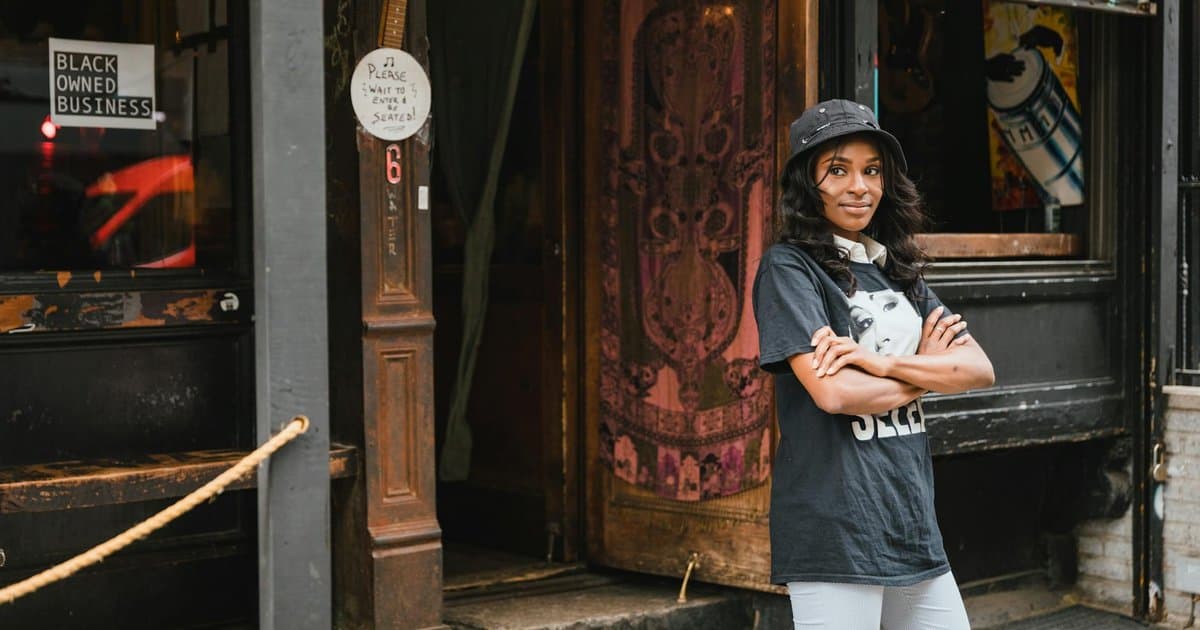
Across the South, Black women are starting new businesses faster than any other demographic group in the country. Census Bureau data through 2024 showed year over year growth in employer firms owned by Black women rose 13.4 percent in the South Atlantic region, more than double the national average. The pattern shows up most strongly in Atlanta, Charlotte, Nashville, Houston, and the Mississippi Delta corridor. The growth rate has held steady since 2021 even as overall small business formation slowed nationally. There are now roughly 1.6 million Black women business owners across the country. A disproportionate share of that growth has been concentrated in southern metros over the past five years.
The drivers are layered. Wage gaps still penalize Black women in the corporate track, and entrepreneurship has become a faster path to building income than waiting for the next promotion. Remote work made it easier to keep a day job while starting something on the side. State tax structures in Texas, Tennessee, and Florida favor small business income compared with the higher tax burdens in northern and western states. A generation of Black women have watched their mothers build businesses with less support than they have access to now. The cumulative effect is real growth in a market that was overlooked for a long time.
The sectors with the most growth are service heavy and capital light. Beauty and personal care lead the pack, followed by professional services, food and beverage, real estate, and education. Tech is growing but from a small base. Healthcare is climbing fastest in nursing services and home care. The pattern is what happens when a group with high human capital but limited access to financing channels finds a way to build. The businesses tend to be smaller, and they tend to survive at higher rates than the broader small business average.
The funding gap is where the picture turns harder. Black women received less than 1 percent of venture capital funding through 2024, per Crunchbase and ProjectDiane data. The number has barely moved since 2020 despite the public commitments made that summer. SBA loan approval rates for Black women are still lower than for any other group, and the average loan size is smaller. Most of the businesses growing in the South are doing it through bootstrapping, friends and family capital, and revenue based financing. The path is harder. The growth is happening anyway.
Banking access matters here in a way most coverage skips. Black-owned banks and CDFIs in Tennessee, Georgia, and Florida have expanded since 2022, with Citizens Trust, OneUnited, and Carver adding small business products. These institutions hold a small share of total deposits, but they account for a disproportionate share of small business loans to Black women in their service areas. When a national bank rejects an application, a CDFI is often where the deal gets done. The local effects are showing up on the ground. Nashville's Jefferson Street corridor, Atlanta's West End, and Houston's Third Ward have reported double digit decreases in storefront vacancies between 2022 and 2025. The revenue stays closer to the community and the jobs go to neighbors.
The barriers that remain are practical. Childcare costs limit how many hours a founder can actually work. Health insurance outside an employer plan is expensive, and marketplace plans in southern states often carry higher deductibles than equivalent plans in other regions. Permit and licensing rules vary widely from city to city. None of these are insurmountable. They add friction, and friction slows businesses down before they have cash to absorb it.
For policy and community work, the most useful response is unglamorous. Faster permits. Clear and consistent licensing. Direct CDFI loan products with under 90 day decision timelines. Childcare subsidies tied to founder status. Health insurance pools for solo entrepreneurs, which Tennessee began piloting in 2025. These are not the kind of programs that make headlines, but they are the kind that move the needle across years.
The story underneath these numbers is direct. A group of founders is building real businesses in real neighborhoods with limited outside capital, and the businesses are sticking. The work is happening in the South because the labor force, the cost structure, and the cultural roots line up. The economic upside reaches into neighborhoods, into families, and into the next generation of business owners. They are already watching and learning what is real, and what is possible. None of this is finished, and that is the point.