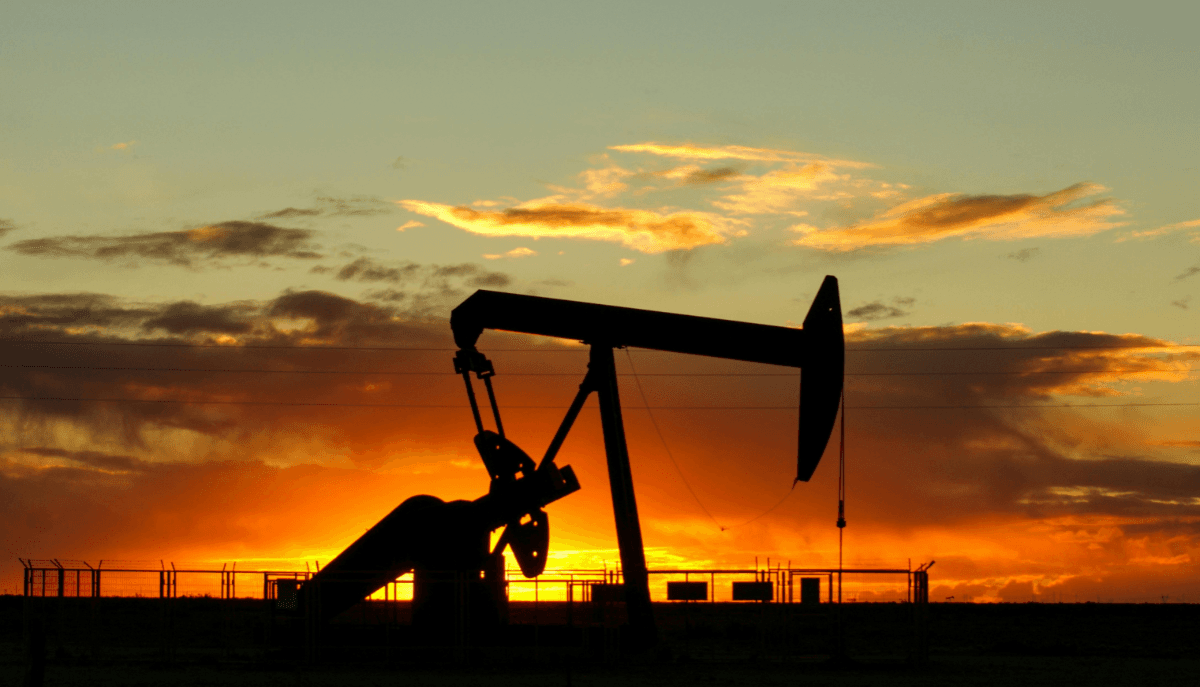
The oil market has settled back down after the late-March spike driven by the Iran confrontation and the Strait of Hormuz threat. Brent crude closed this week around 74 dollars a barrel, roughly 20 dollars off the early April peak. West Texas Intermediate is trading below 70 for the first time in about a month. The immediate fear premium has come out of the price, which is the expected pattern after a geopolitical shock when the worst-case scenario does not materialize. The harder question is what the fundamental setup actually looks like heading into the second half of the year and into 2027.
The near-term supply picture is loose. OPEC plus has been gradually unwinding voluntary production cuts on the schedule it laid out last year. Saudi Arabia, the UAE, and Iraq are all producing above their 2025 averages. US shale production has held steady at roughly 13.4 million barrels per day, which is near the record set in 2024. Non-OPEC supply from Brazil, Guyana, and Norway continues to grow. On the demand side, global oil demand is tracking slightly below last year's pace, with the EIA estimating growth of about 1.1 million barrels per day for 2026, slower than the International Energy Agency's earlier projections. The combination of steady supply and softer demand growth is why the price has settled.
Under the surface, however, several factors are tightening the 2027 outlook. US shale decline rates, which were subdued during the 2020 to 2023 period because producers were drilling their best acreage, are now accelerating as operators move into lower-quality Tier 2 acreage. Several independent analysts, including those at Rystad and Wood Mackenzie, now expect US production to plateau in 2026 and begin a modest decline in 2027 at current capex levels. Public producers have generally held the line on capital discipline, meaning that any rebound in prices will not translate quickly into additional production the way it would have in the 2015 to 2019 cycle.
Global inventory data is also worth watching. OECD commercial inventories are roughly in line with the five-year average, but the draws during the summer driving season will be the real test of whether the market is actually balanced or whether the softness in early 2026 pulled forward some of the weakness. If Q2 and Q3 draws run tight, the 2027 setup looks meaningfully different.
On the geopolitical side, the Iran situation is in the ceasefire framework phase, which extends through April 22 with the possibility of a longer framework if negotiations progress. The scenario where Iran restricts exports substantially is off the table for the moment. The scenario where Iran loses production through sanctions enforcement or domestic disruption remains plausible over the longer term. Russian production has held up despite the sanctions regime, and refined product exports have redirected toward India, China, and emerging markets at prices that are discounted but still meaningful.
For equity investors, the integrated majors have been strong performers through the volatility. ExxonMobil, Chevron, Shell, and BP have all benefited from the combination of stable upstream production, meaningful downstream contribution, and capital returns that reward shareholders regardless of short-term price swings. The independent E and P names have been more volatile, which is the expected pattern. For investors looking for beta to a higher oil price, the independent names remain the way to express that view. For investors looking for quality and capital return, the integrateds still screen well.
The refiner trade has become more interesting as the crack spreads have normalized. US refiners benefited from unusually wide crack spreads during the 2022 to 2024 period, and those have compressed meaningfully. The 3-2-1 crack spread is back in more normal territory, which means refiners will need to earn their performance from operational execution rather than from a tailwind in the product market.
Natural gas, which often correlates with oil in equity baskets but has its own fundamentals, is having a better year. Henry Hub has climbed above three dollars per MMBtu as LNG export capacity has continued to expand. Venture Global, Cheniere, and several smaller operators are bringing additional capacity online through 2026 and 2027, which will continue to pull US gas into export markets and support domestic prices.
The broader takeaway is that the oil market has moved past the immediate shock of the Iran confrontation and is now trading on fundamentals. Those fundamentals are loose in the near term and increasingly tight further out. Investors who can look past the next two quarters and position for the 2027 setup have an opportunity that the current spot price does not fully reflect. For those trading the short term, the range has been wide and the catalysts are clearly geopolitical, which is always a difficult market to trade with discipline.