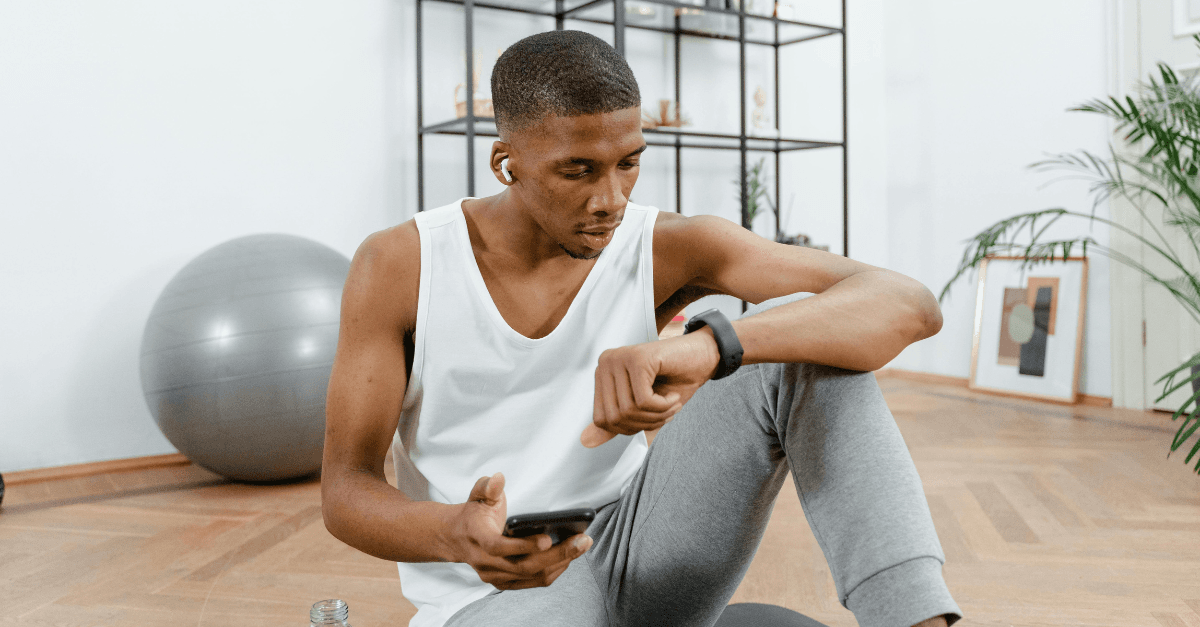
Wearable fitness technology has been the top trend in the American College of Sports Medicine's annual Worldwide Survey of Fitness Trends for multiple consecutive years, and in 2026 it holds that position again. But this year the headline is not about adoption rates. Nearly half of US adults now own a fitness tracker or smartwatch. The story is about what the data is being used for. For most of the past decade, wearables were fundamentally scoreboards. You wore a device, it counted steps and heart rate and sleep hours, and you looked at the numbers with mild interest. The shift happening in 2026 is from tracking to programming. The data your body generates is being used to design the actual training you should do on any given day, in real time, rather than serving as a retrospective summary of what you already did.
The mechanism behind this shift is heart rate variability, commonly called HRV, combined with sleep quality scoring and recovery metrics. HRV measures the variation in time between heartbeats and has emerged as one of the most reliable indicators of whether your nervous system is ready for high-output training or needs a lower-intensity session. Devices from Garmin, Apple, Oura, and Whoop have been capturing this data for several years. What is new is the intelligence layer on top of it. Training apps connected to these devices are now issuing actual programming adjustments based on the numbers, not just showing you a dashboard you have to interpret yourself. The prescription is coming out of the data rather than following a static six-week plan regardless of how your body is actually responding.
The ACSM survey pulls responses from over 3,000 fitness professionals across multiple countries, and the direction of their consensus is clear. Personal trainers and coaches are increasingly designing programs with wearable data as a primary input. They use their clients' physiological patterns to adjust intensity, volume, and recovery days on a rolling basis. The traditional model of following the same program for six to twelve weeks regardless of individual response is being replaced by something more honest about the actual state of your system at any given point. That shift is not small for anyone who has ever pushed through a hard session on a day their body was telling them to back off, and paid for it with a two-week setback.
Recovery as a category has also become a central part of the health and wellness conversation in ways it was not three years ago. Cold plunges, infrared saunas, percussive therapy, and structured sleep protocols have moved from professional athlete training regimens into mainstream wellness practice. The wearable data connection makes these tools more actionable because you can actually measure whether they are moving your recovery scores in the right direction, rather than hoping they are. That feedback loop is what separates the current generation of wellness technology from what came before it, which mostly diagnosed the problem without providing a clear path to address it.
What the 2026 moment represents for health and wellness broadly is a more individualized entry point than the industry has historically offered. Fitness for decades operated on the premise that there was a general program most people should follow with some adjustments for age and fitness level. The data increasingly supports a different premise: that what works for one person's physiology may be significantly different from what works for another person's. The tools to identify and act on those differences are now accessible outside of elite sports science settings. You do not need a sports physiologist on staff to get meaningful guidance on how your nervous system is responding to training load. You need a device and a few weeks of consistent data.
The broader wellness implication is also worth naming. The ACSM survey found that 78 percent of people who exercise regularly cite mental and emotional well-being as their top reason for working out, ahead of weight management or physical fitness as traditionally defined. Wearable data that tracks stress responses, HRV, and sleep quality connects the physical training side of wellness to the mental health side in a way that older fitness tracking models did not. People who can see a direct relationship between how they trained, how they recovered, and how their mood and cognition tracked across the week are more likely to treat their training as a health investment rather than a performance obligation.
The tools are better than they have ever been. The question in 2026 is not whether the technology exists to personalize your health and fitness approach in real time. It is whether you are actually using it to make decisions, or just watching the numbers change and continuing to do the same thing regardless.