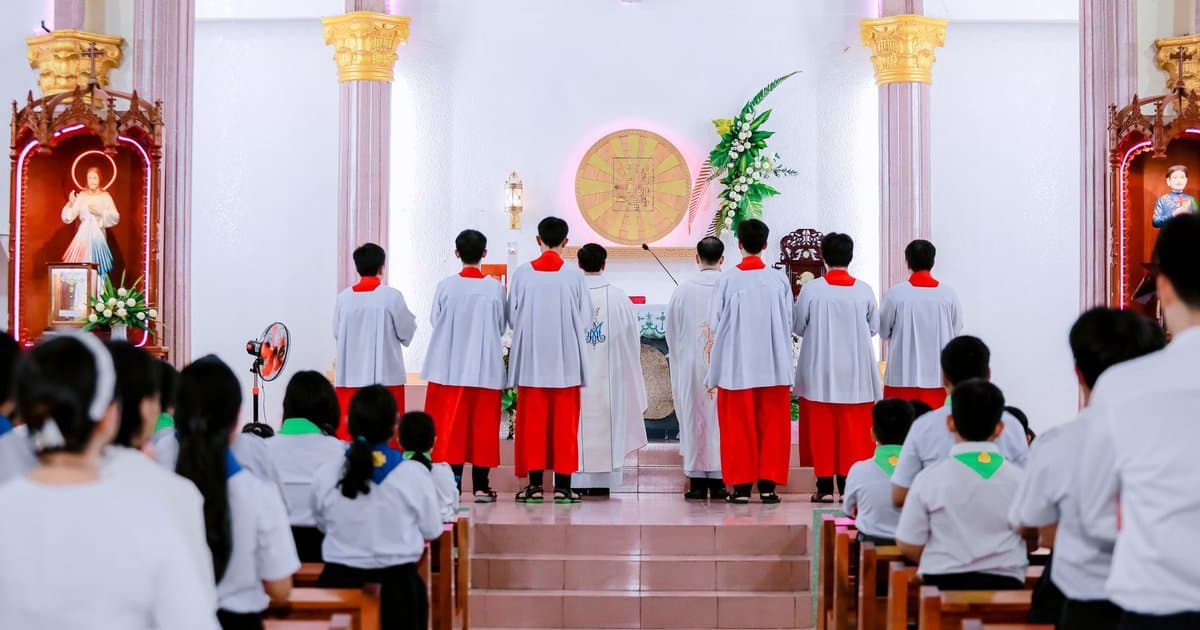
The latest Gallup survey on American religiosity landed with a finding that surprised a lot of people who had written young men off when it comes to faith. Forty-two percent of American men between the ages of 18 and 29 now say religion is very important to their lives, up from 28 percent in the 2022 to 2023 window. Monthly church attendance among this same group climbed to 40 percent, its highest mark since 2012 and 2013. And for the first time in at least 25 years of tracking, young men have surpassed young women on core measures of religious importance and practice. That is not a blip. That is a directional shift.
The PRRI data does not quite see the same picture, and that disagreement between major pollsters is worth taking seriously. PRRI finds no evidence of a broad religious resurgence and argues the growth is confined primarily to young Republican-identifying men. Gallup counters that the trend holds across wider segments. What both data sets agree on is that something is moving differently among young men specifically, and that this cohort has not followed the continued downward trajectory that researchers expected based on patterns from the 2010s. Whether you call it a revival or a realignment, the floor has stopped dropping.
The reasons behind this are not complicated if you pay attention to what young men are actually saying. The frameworks they were handed as replacements for faith have mostly failed to deliver. The hustle-and-optimize culture promised a path to purpose and left a lot of men with burnout and empty metrics. The online masculinity content space gave them ideology but not community. The therapy-first mental health conversation, while genuinely valuable for many, does not address the deeper questions of meaning, obligation, and identity that faith traditions have navigated for centuries. When none of the secular alternatives answer the question of who you are supposed to be and what you are supposed to live for, some men walk back to the place that at least has a serious answer.
What is notable about the flavor of this return is that it is not trending soft. The young men finding their way back to faith in 2026 are largely gravitating toward traditions that ask something of them. Catholic and Eastern Orthodox churches are seeing significant growth in male converts, in part because the liturgical seriousness and the clear doctrinal framework offer something different from the ambient spirituality that became the default alternative to organized religion. Reformed and confessional Protestant communities are also pulling in men who want theological weight rather than a worship experience designed to keep them emotionally comfortable. The trend is toward depth, not ease.
The political dimension is real but probably overstated as an explanation. Yes, Gallup data shows the growth is more pronounced among Republican-identifying young men. But reducing the faith return to a political realignment misses what is actually happening in the communities where it is occurring. Men showing up to prayer groups and liturgies and small groups are not primarily there to make a political statement. They are there because the loneliness is real, because the questions about meaning are genuinely unresolved, and because faith offers a community with standards and a framework with staying power. The political correlation may be an effect of the same underlying factors that are driving both trends, not a cause.
For pastors and church leaders, the question is what to do with the opening. The pattern in recent decades has been to soften church culture to make it more approachable, which often meant inadvertently making it less interesting to the very people now showing interest. If the Gallup data reflects real demand from young men for something with theological seriousness, experiential depth, and genuine community rather than just a Sunday service, then the churches that kept their standards and their substance are going to find themselves in a better position than the ones that made everything easier. The research says the men are coming back. What they find when they get there is the real test.
---