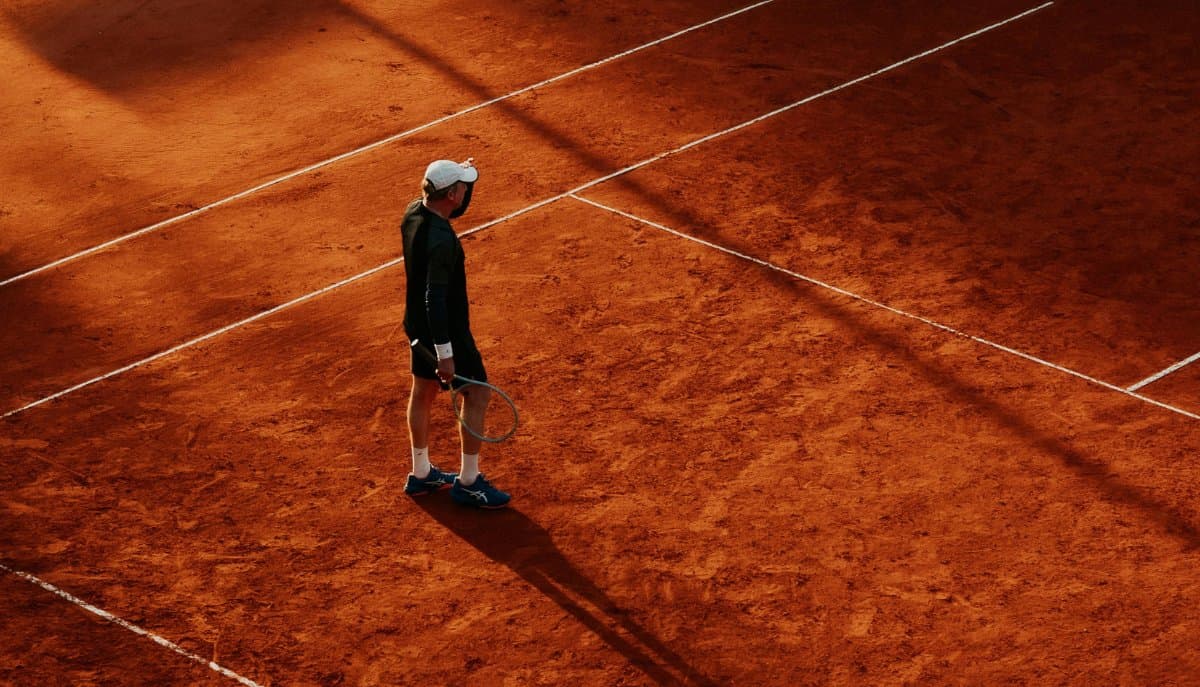
Of all the tournaments on the ATP and WTA Tours, the Madrid Open might be the most brutal test of complete tennis. Not just because of the clay, which punishes any weakness in footwork, physicality, or patience. But because of the altitude. Madrid sits at roughly 2,100 feet above sea level, which affects the ball's bounce and speed in ways that players have to adjust to in real time. The combination of clay and altitude creates a surface that plays unlike any other tournament on the calendar, including Roland Garros.
That distinction matters because Madrid is one of the few clay court stops where the baseline specialists don't always have a decisive advantage. The altitude speeds the ball up slightly relative to sea-level clay, which rewards flatter, more aggressive hitting. Some players who struggle on standard clay have thrived in Madrid. Others who dominate the surface elsewhere get neutralized by the conditions. It creates a more open field than most clay events and produces some of the most interesting tactical tennis of the spring swing.
Carlos Alcaraz, the Spanish player who has built his career in front of home crowds on this surface, has made Madrid his personal showcase. His combination of explosive movement, varied ball striking, and exceptional touch on clay makes him ideally suited for these conditions. He has won the title here multiple times and has the crowd with him in a way that few athletes experience at any level of any sport. Playing in front of a home crowd that views you as a generational talent changes the energy in the building. Alcaraz has shown he knows how to use that energy as fuel rather than pressure.
The women's field in Madrid this year includes some of the most compelling competition in the sport. American players have invested heavily in clay preparation in recent years, recognizing that the European swing through Madrid, Rome, and Roland Garros represents a significant portion of the season. That maturation is a real story, even if it rarely gets the attention it deserves domestically. When American players perform well in Madrid, it tends to set up productive Roland Garros campaigns.
From a viewer's standpoint, clay court tennis rewards sustained attention. The rallies are longer. The tactics are more layered. The margin for error is different because the clay absorbs pace and forces players to construct points rather than end them quickly. This is the version of tennis that its most devoted fans consider the purest expression of what the sport can be at its best. A player can't simply overpower the clay surface. They have to think through it.
Madrid also sits at a specific strategic moment in the tennis calendar. It comes after Monte Carlo and Barcelona, which means players arrive with clay form already established. It comes before Rome, the final major clay preparation before Roland Garros. Players who peak at Madrid often arrive at Roland Garros with momentum, and arriving at Roland Garros with momentum has historically translated into deep runs. The tournament functions as both a competition and a diagnostic: coaches and players use it to understand exactly where they are physically and tactically heading into the most important clay court event of the year.
For American fans who don't follow tennis closely outside the Slams, the Madrid Open is worth your time. The matches are longer, the conditions are unique, and the stakes are real both for individual tournaments and for understanding who is positioned well for Roland Garros. Clay tennis is an acquired taste for audiences raised on the speed of hard courts. But once you understand what you're watching, it becomes the most rewarding version of the sport. Madrid is one of the best places to see it play out.