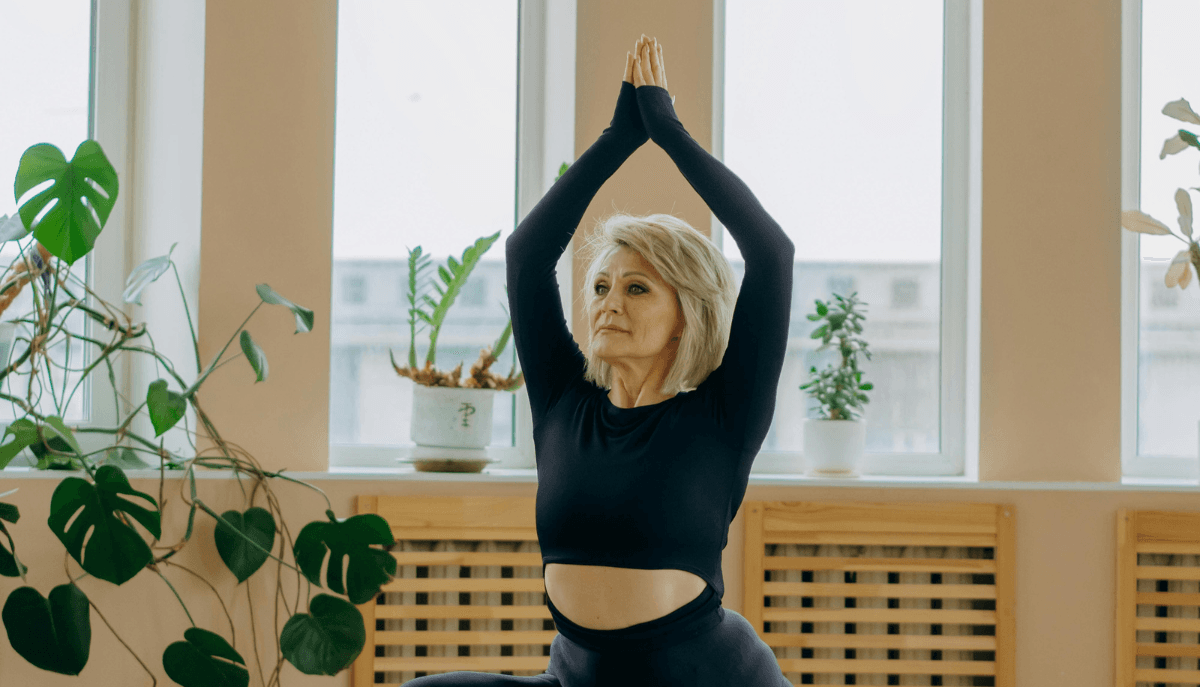
Pilates has been the most-booked workout globally for the third year in a row, with bookings up 66 percent since 2024 according to fitness platform data tracked for the 2026 health and wellness season. That number is not a fluke, and it is not driven by aesthetics. It is driven by a fundamental change in how millions of people are approaching their bodies, especially as the conversation around longevity and healthy aging has moved from niche wellness circles into the mainstream fitness industry. People are not booking Pilates sessions because they want to look a certain way. They are booking them because they want to be able to move well at 60, 70, and beyond.
The shift is part of a broader reorientation in fitness culture that 2026 has made undeniable. A 2025 Wakefield Research survey commissioned by Orangetheory found that 60 percent of Americans now cite longevity and healthy aging as their primary motivation for working out. That is a significant departure from the calorie-burning, aesthetics-first mentality that dominated fitness marketing for decades. The question that more people are walking into gyms and studios with is not "how do I look better?" It is "how do I stay functional as I get older?" Pilates happens to be exceptionally well-designed to answer that question.
The method was developed by Joseph Pilates in the early 20th century and has always emphasized controlled movement, core engagement, breath mechanics, and spinal alignment over brute force or cardiovascular output. What made Pilates feel niche for decades was also what made it ahead of its time: it was built around the concept of quality of movement rather than volume or intensity. The training principles that physical therapists now use with post-surgical patients are essentially Pilates principles with different branding. The research base that has grown around the method has consistently shown benefits in mobility, balance, joint stability, and functional strength, which are exactly the physical capacities that decline most predictably with age.
The menopause dimension is also driving this surge in a way that the fitness industry is just beginning to publicly acknowledge. Over 47 million women enter perimenopause or menopause annually worldwide, and the physical changes that come with that transition, including joint discomfort, reduced bone density, pelvic floor changes, and hormonal effects on muscle mass, make high-impact training increasingly difficult and sometimes counterproductive. Pilates, particularly reformer Pilates, offers a low-impact alternative that still delivers real resistance training benefits. An 8-week Pilates program has shown measurable reductions in menopausal symptoms in clinical studies. The growing certification landscape for Pilates instructors specializing in women's midlife health reflects how seriously studios are taking this population.
The Reformer machine itself deserves attention in this conversation. What separates reformer Pilates from a mat class is the adjustable spring resistance, which allows the method to scale across fitness levels, recovery timelines, and physical limitations. A post-surgery rehab patient and a competitive athlete can both use a reformer in the same studio and get appropriate challenge from the same equipment. That adaptability is rare in the fitness world, where most modalities are designed for people who are already relatively healthy and pain-free. The Reformer's ability to meet people where they are, rather than demanding that they arrive ready for it, explains a lot of its growth.
What trainers are also noticing is that Pilates integrates well with other training methods. Strength athletes use it for mobility work and injury prevention. Runners use it to address the muscle imbalances that running creates over time. Cyclists, who tend to develop tight hip flexors and rounded thoracic spines, benefit from the spinal extension and hip mobility emphasis in Pilates programming. Rather than competing with strength or cardio training, Pilates functions as the connective tissue that holds a broader training program together and extends how long that program can continue. That is not something most fitness modalities can claim.
The cultural moment matters here too. The social media aesthetic that once pushed people toward extreme physiques and punishing workout regimes is losing its grip, particularly among the 30-to-50 age group that has the most disposable income to spend on fitness. That demographic is not interested in looking like a fitness influencer. They are interested in feeling good, maintaining energy, managing stress, and protecting their ability to stay active. Pilates speaks directly to those motivations in a way that boot camps and HIIT classes simply do not.
For anyone who has been dismissing Pilates as too gentle or too feminine or too slow to be worth the time, the data is clear: the most-booked workout in the world is not what it used to be, if it ever was. It is a method built on precision, progressive loading, and the understanding that how you move matters as much as how hard you move. In 2026, that is not a niche philosophy. That is the direction the entire fitness industry is heading.