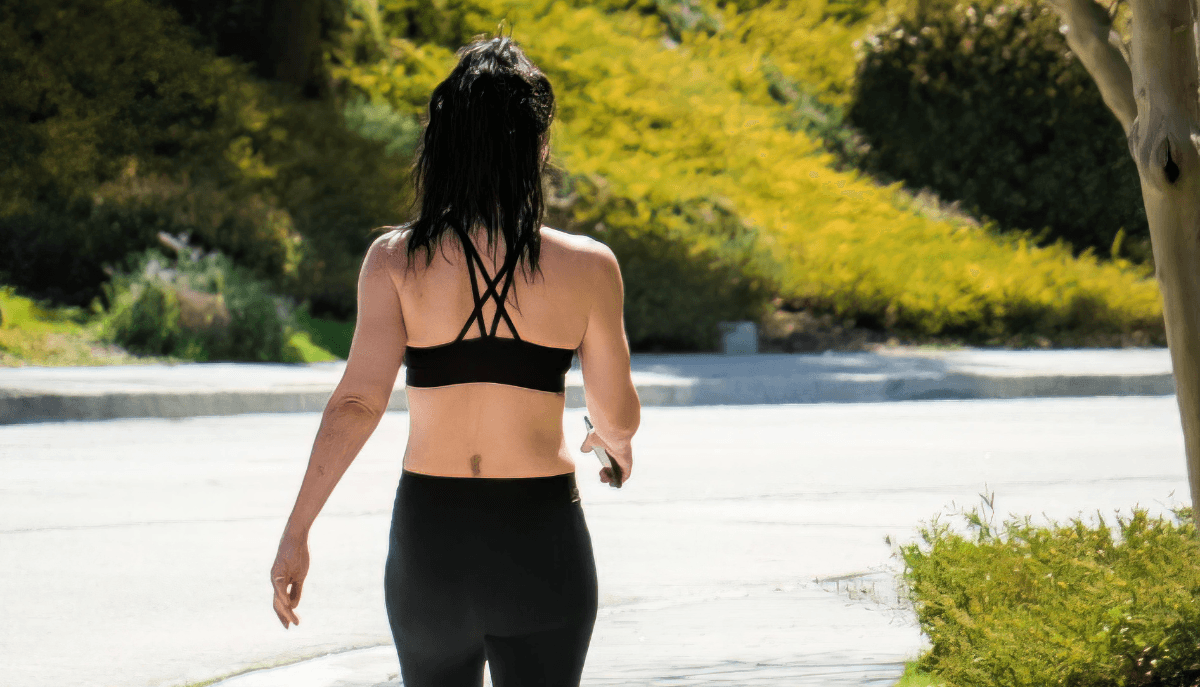
Somewhere between the fifth burpee and the tenth box jump, a lot of people decided they were done. Not done with fitness, but done with the version of fitness that treats every workout like a performance review. Japanese walking, a practice rooted in deliberate movement, upright posture, and present-moment awareness, has surged 2,986 percent in search interest over the past year according to fitness trend data. That number is not a typo. It is the fastest-growing fitness trend of 2026, and it is built on the radical idea that moving slowly on purpose might be more effective than moving fast out of guilt.
The practice itself is not complicated. Japanese walking involves maintaining an upright posture with your chin parallel to the ground, taking deliberate heel-to-toe steps, and walking at a pace that allows you to be aware of your breathing, your surroundings, and the sensation of your feet contacting the ground. There are no intervals. There is no heart rate target. There is no app tracking your splits. The entire point is to walk with intention rather than distraction, and to treat the walk itself as the workout rather than a warm-up for something harder. It draws from a tradition of walking meditation that has existed in Japanese culture for centuries but has only recently been repackaged for Western fitness audiences.
The backlash against high-intensity training has been building for years, but 2026 feels like the tipping point. The HIIT boom that started in the mid-2010s created a generation of gym-goers who equated sweat volume with effectiveness. If you were not drenched, gasping, and sore the next day, the workout did not count. That mentality drove a lot of people into the gym, but it also drove a lot of people out. Injury rates climbed. Burnout became common. And the research started catching up to what coaches had been saying quietly for years: most people do not need to train at high intensity most of the time. They need to move consistently at moderate intensity, and they need to enjoy it enough to keep doing it.
Japanese walking fits that framework perfectly. The cardiovascular benefits of walking have been documented extensively. A 2023 meta-analysis published in the European Journal of Preventive Cardiology found that walking as few as 3,967 steps per day reduced all-cause mortality, with each additional 1,000 steps providing further benefit. The study included data from more than 226,000 participants across 17 studies. Walking is not a lesser form of exercise. It is the baseline that every other form of movement is built on, and for most people, doing more of it would produce better health outcomes than adding another intense training session to an already stressful week.
The intentional component of Japanese walking is what separates it from just going for a stroll. The emphasis on posture activates core stabilization muscles that most people neglect. The heel-to-toe gait pattern encourages proper ankle mobility and reduces the shuffling stride that develops when people spend most of their day sitting. The mindfulness element has its own body of research supporting reductions in cortisol, improvements in sleep quality, and better emotional regulation. You are not just walking. You are practicing a form of movement that addresses the physical and mental consequences of modern sedentary life simultaneously.
The fitness industry is paying attention. Gym chains that built their brands around intensity are quietly adding walking programs and recovery-focused classes to their schedules. Wearable technology companies are shifting their marketing from calorie burn to step quality and movement consistency. The shift is not about abandoning hard training. It is about acknowledging that hard training is a tool, not an identity, and that the best fitness practice is the one you actually maintain for decades. Japanese walking is not going to replace deadlifts or running or any other form of exercise. But for the millions of people who quit the gym because they felt like they were never doing enough, it offers something valuable: permission to move at a pace that feels human.