YouTube announced in late 2025 that its podcast listener base had grown to over 100 million monthly users, making it one of the largest podcast listening platforms in the United States. That number was notable not just for its size but for what it implied about where the medium is going. Those 100 million users are accessing podcast content on a video platform, which means a significant percentage of them are watching as much as listening. The creators who treated YouTube as an afterthought, uploading static images or simple waveforms against an audio track, are now being outperformed algorithmically by creators who treat YouTube as a primary distribution channel with actual video production behind it. The algorithm has shifted in that direction and it has not shifted back.
The math behind the video podcast move is not complicated but it is real. YouTube's algorithm has historically prioritized watch time and return visits, and a well-produced video podcast with a compelling host and intentional visual staging generates both more reliably than an audio-only track. Podcast networks that have committed to video production report two to four times growth in their YouTube-specific audiences within six to twelve months of making the transition. CPM rates for podcast advertising on YouTube, calculated on views rather than downloads, have been running higher than traditional podcast ad rates for comparable audience sizes. For creators who have built their revenue model around host-read audio ads, that difference changes the revenue calculation in ways that are harder to ignore as the gap widens.
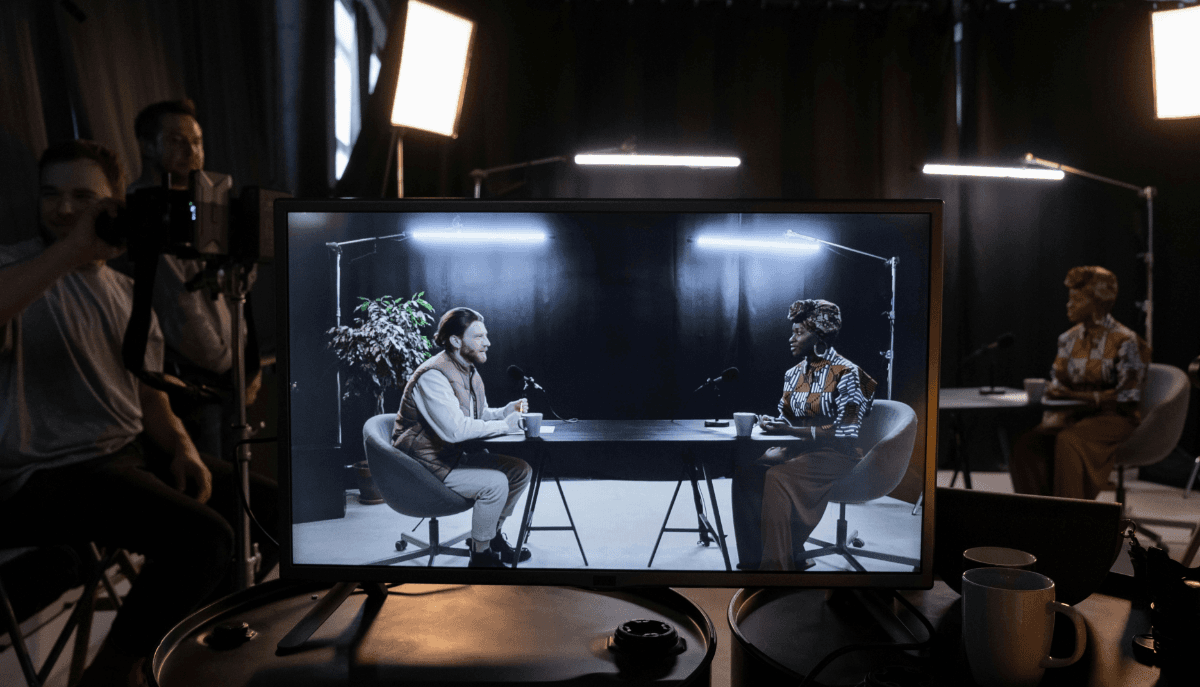
What the transition actually requires financially depends on the scale of the operation. For a one to two person show, the minimum functional setup for video that reads as professional on YouTube is a camera in the $800 to $1,500 range, a lighting configuration that does not require a full studio, and a background that communicates something intentional about the brand. Ring lights at the $150 to $300 price point have improved significantly, and the visual baseline for a professional podcast look is more achievable at lower cost than it was three years ago. Total entry-level investment is roughly $1,500 to $2,500 for the production side, not including editing software. DaVinci Resolve is free and fully capable. Adobe Premiere runs approximately $55 per month. None of that is a prohibitive cost for a podcast generating any meaningful income.
The harder cost is time. Editing a video podcast takes two to three times longer than editing audio, and the gap is wider for creators who do not have a dedicated editor. Many mid-tier podcasters running audio-only shows have had to choose between hiring an editor, learning video editing themselves, or staying audio-only and accepting a slower growth ceiling. Podcast production services have emerged specifically to serve this transition, offering video editing packages designed for podcast content at rates between $200 and $600 per episode depending on length and complexity. For creators generating $2,000 to $5,000 per month from a show, those rates are manageable but require treating the podcast as a business with operating costs rather than a side project.
The strategic question in 2026 is whether you are building a media brand or a personal brand. Media brands benefit more from YouTube's distribution channel because discoverability through search and recommended video is how new audiences find new creators at scale. Personal brands built on existing audiences can sustain on audio longer because the relationship is the product rather than the discovery mechanism. But even personal-brand-driven shows are finding that their most engaged listeners want the video version, and producing it creates a content asset that works across YouTube, clips for Instagram Reels and TikTok, and full episodes on Spotify's video podcast tier simultaneously. One production generates multiple pieces of distributed content when video is built into the workflow from the start rather than added as an afterthought.
Spotify's video podcast tier, which has been expanding its monetization offerings since 2024, now includes video-specific ad formats and creator tools that rival what YouTube offers for smaller audiences. The combination of Spotify's audio distribution strength and YouTube's video recommendation engine gives video podcasters two meaningful channels with different but complementary audience acquisition logic. Building for both from the start is a more efficient approach than starting audio, finding an audience, and then retrofitting a video setup into a production workflow that was not designed for it.
The window for treating video as optional is closing. For podcasters who have been watching the trend and waiting to see if it holds, the data from the last twelve months has been consistent enough that waiting is now the less prudent choice. The question is no longer whether to go video. It is how to build a setup you can actually maintain at the quality level that the platform rewards.