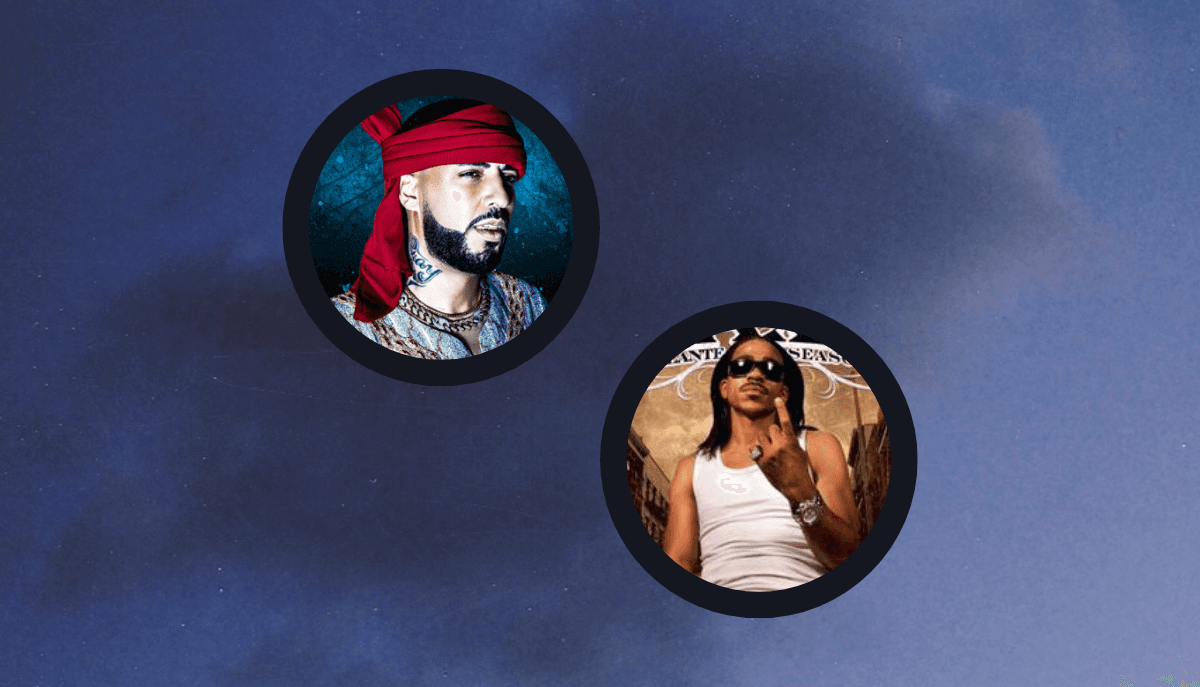
French Montana and Max B drop Wave Gods 2: Cosmos Brothers on April 24, and the weight behind that release date is not something you can understand without knowing the full context. Max B, born Charly Wingate, spent roughly a decade incarcerated after a 2009 murder-for-hire conviction that pulled him out of the music right when the foundation was being laid for what became known as the Wavy movement. French Montana, who came up alongside Max B through the Bronx mixtape circuit, kept his name alive publicly throughout that period, advocated for his release in interviews, and made it clear that whatever success he built was standing on a foundation that Max B helped pour. Wave Gods 2 is the reunion, and it is carrying everything that history implies.
The original Wave Gods project from 2012 sounds like a specific moment in time that cannot be manufactured. There is an intimacy to it, a looseness that comes from two people who genuinely know each other, not a calculated collab with a marketing strategy behind it. Max B's melodic rap style, his signature ad-libs, the way he moved between rapping and singing before that approach became the dominant mode in hip hop, made him one of the more distinctly original voices to come out of New York in the late 2000s. The argument that his influence on the melodic rap that dominated the next decade goes largely uncredited is a legitimate one. You can hear it in the way New York artists started approaching hooks and flow in the mid-2010s. The lineage is there.
What has made Max B's post-release music worth paying attention to is that he has not tried to rewind the clock. He does not rap like it is 2009. He incorporates where he is now, what he went through, what it cost, without turning every song into a statement piece. That restraint is actually harder to execute than it sounds. A lot of artists coming out of extended prison time either try to erase it from their music or make it the only thing. Max B is doing neither, which is why the advance material from Wave Gods 2 sounds like a continuation rather than a nostalgia act. The production on the released previews keeps the melodic signature while sounding current enough to stand on its own without needing the historical context to justify it.
French Montana's position in 2026 is interesting because he has achieved mainstream crossover success multiple times, including records that played well outside the core hip hop audience. Dropping a project this personal and this rooted in a specific New York tradition is clearly not about chart positioning. He has been making the argument publicly for years that the Wavy movement did not get its full credit, that the influence of that particular era of Bronx and Harlem rap extended well beyond what it was recognized for at the time. Wave Gods 2 is the audio version of that argument. Whether it connects broadly or primarily with the people who were already there for the original run, it is clearly a project made from a place of genuine purpose rather than commercial calculation.
The release lands at a moment when New York's position in hip hop is genuinely contested. Atlanta, Houston, and Los Angeles have all made compelling cases for cultural leadership over the past decade. Wave Gods 2 does not engage that conversation directly but its existence as a serious, unhurried, relationship-first project from two artists with real history together represents a tradition of New York rap that still has standing. It is not chasing the algorithm. It is not built around a single to dominate playlists. It is a record made between two people who survived separate journeys to still be here at the same time, and that is something the music business does not always make room for. April 24 will tell you whether the audience has been waiting too.
---